


$85.00 – $150.00Price range: $85.00 through $150.00 +tax
CHOOSE CHARACTERISTICS AND QUANTITY
PRODUCT DESCRIPTION
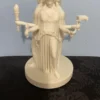
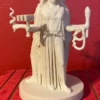
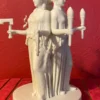
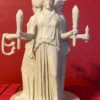
Hecate Chiaramonti Triformis
Hecate is a goddess from ancient Greek religion, commonly depicted with a pair of torches, a key or snakes, or accompanied by dogs, and in later periods, shown in a triple form or with three bodies. She is associated with crossroads, the night, light, magic, pharmakeia, and the Moon. Her name was also used to refer to Artemis in the underworld. She was the goddess of the night and necromancy, accompanied by her baying hounds of hell. Her first appearance in literature is found in surviving sources such as Hesiod’s Theogony. She has recently undergone an immense resurgence in popularity with the rise of Wicca/Witchcraft and Neopaganism all over the world.
Hecate is a titanic goddess, daughter of Perses titan-god of destruction and Asteria titan- goddess of falling stars and nighttime divination and granddaughter of the Titans Phobos and Coeus. She is widely associated with magic, the night, ghosts, and crossroads, but she is also considered a protector of youth and warriors. As one of the oldest and most powerful deities in the ancient world, Hecate has dominion over the invisible forces that govern transitions and boundaries between life and death.
The cult of Hecate originated in Caria, a region in southwestern Anatolia (modern-day Turkey), where she was worshipped long before her widespread adoption by the Greeks. Her cult later spread to other regions, where significant temples were built in her honor, particularly in Lagina and Pergamon. She also gained prominence in the rest of the Greek and Roman world, with sanctuaries in natural places like the Sacred Cave on the island of Samothrace, called Zeryntho, Rome, Nemi an important site of her cult in ancient times. Additionally, Hecate was worshipped in the ancient Black Sea cities of Heraclea, Amastris, and Sinople, as well as in the region of Colchis, the land where the Golden Fleece was kept. These cities and regions were crucial centers of Hecate’s cult, reflecting her broad influence and importance in ancient religious practices. In ancient Athens, Hecate was one of several deities venerated as the protector of the oikos (the household), ensuring the prosperity and well-being of families. Her role as guardian of both the private and public spheres reflects her power and influence in daily life.
In Corpus Hermeticum, Hermes Trismegistus speaks of Hecate as a profound cosmic force, emphasizing her central role in the mysteries of the universe. Hecate is considered a mediator between the divine and material realms, reinforcing her position as a divine figure that connects the earthly and the spiritual. In the Greek esoteric writings influenced by Egypt, related to Hermes Trismegistus and the magical papyri of the Late Antiquity, she is described with three heads: one of a dog, one of a serpent, and one of a horse, reflecting her connection to the animal kingdom and her multiple domains.
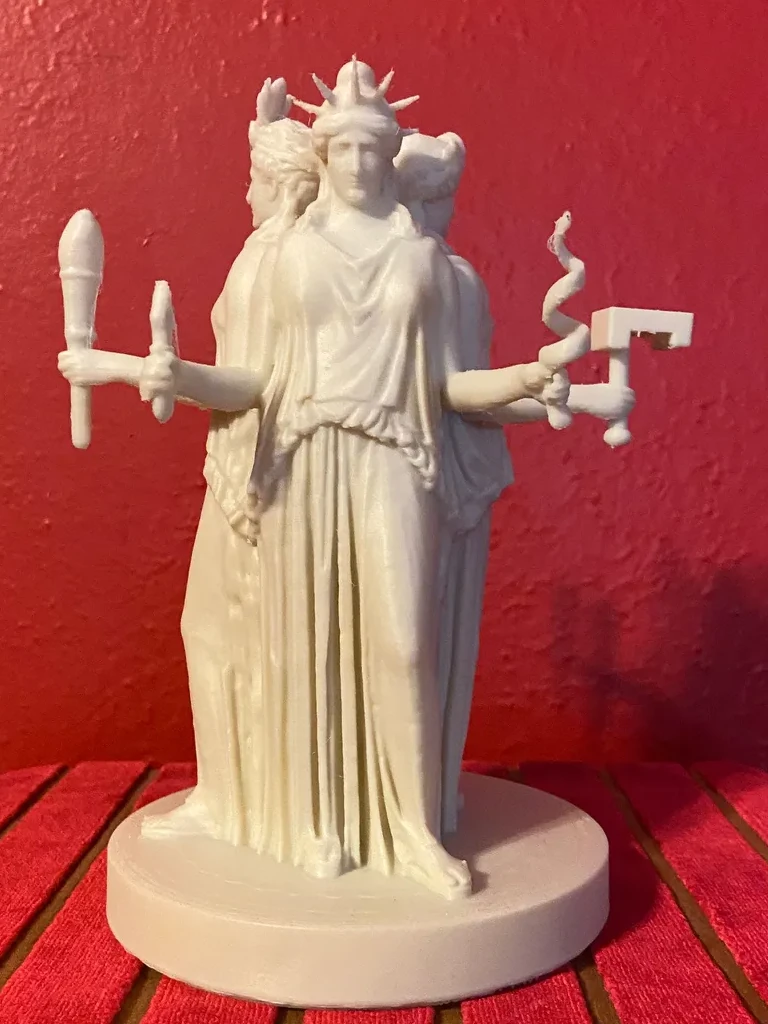
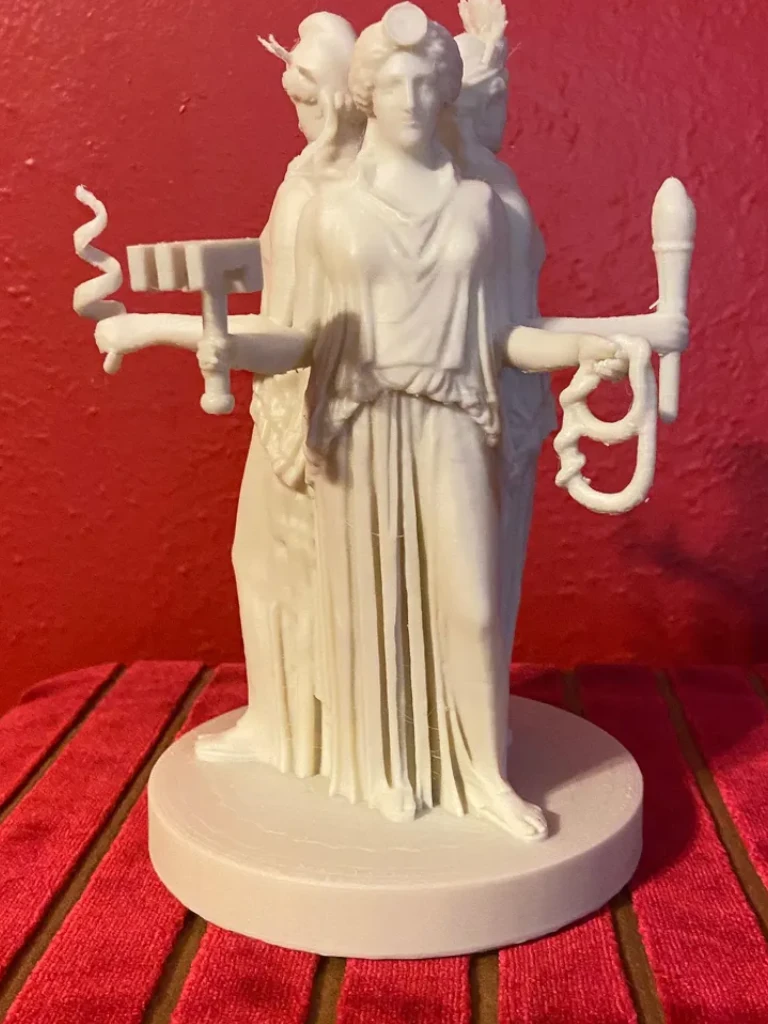
Hecate was also honored in the ancient world and still is as a goddess of transformation and boundaries, often depicted in the iconic three-formed way. The torches she holds symbolize her association with solstices, light, guiding travelers through the darkness, and her role in illuminating the path between life and death. The key she carries symbolizes her power over thresholds and doors, governing the passage between different realms, including the sensible and the supersensible worlds. The serpent she holds is a powerful symbol of transformation, rebirth, and knowledge. Snakes are ancestral symbols of wisdom and regeneration, and in the case of Hecate, they reflect her control over hidden forces, including life, death, and the transition between both. Additionally, Hecate also holds a dagon, symbolizing her power and protection. The dagon represents her ability to defend against malevolent forces and sever the ties that bind the realms of the living and the dead, personifying her role as protector and guide through the mysteries of life and the afterlife.
Hecate’s cult in Rome adopted Greek and Eastern elements. The figure of Hecate as protector of homes and crossroads is translated into this statue, which combines Greek, Roman, and Eastern influences, resulting in one of the most fascinating representations of the goddess. Although the original statue is known to be dismembered, the Chiaramonti sculpture remains a key piece for understanding how Hecate was perceived in ancient Rome.
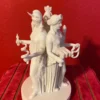
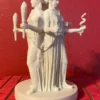
This 3D printed replica represents Hecate Chiaramonti Triformis. It is a Roman copy of a Hellenistic original, faithfully made to resemble the original statuette from the early 1st century CE, which is unfortunately housed in the Capitoline Museums. The goddess, dressed in Hellenistic-style robes in her iconic triple form, reflects her power and dominion over the earthly and spiritual worlds, symbolizing her control over the three realms: earth, sea, and sky, and her dominion over the past, present, and future. The three figures of Hecate are adorned with divine attributes such as torches, a key, a dagon, and serpents, each symbolizing her role as protector and guide. The central head is crowned with seven solar rays, symbolizing her connection to light and her power over the cosmos. This representation highlights her role as a luminous goddess who guides mortals and spirits through the darkness and thresholds between the worlds. The solar rays are a clear distinction of her divine power, reflecting her cosmic authority. The head to the right of the figure bears a well-defined crescent moon on top of the head, accompanied by decorations that adorn the moon. This symbol reflects her association with the moon, a key attribute of Hecate, particularly in her role as the goddess of the night, mysteries, and ghosts. The crescent moon is an emblem of her power over the phases of the moon and her dominion over the boundaries between the physical and spiritual worlds. The adornments highlight the importance of this attribute in her identity. Additionally, the three statues of Hecate together symbolize the states of the Moon (Artemis) in the sensible world, with a connection to the intelligible world, the abode of the gods, reflecting her role as a mediator between the earthly and the divine. The head to the left is crowned with a laurel wreath, a symbol of victory, honor, and divinity. This attribute highlights the noble and protective character of Hecate. The laurel wreath reflects her power over the world of the living and her ability to protect and guide human beings, especially during times of conflict or transition.
Hecate statues were often placed at crossroads and temple entrances, serving as guardians against harmful forces and guiding travelers.
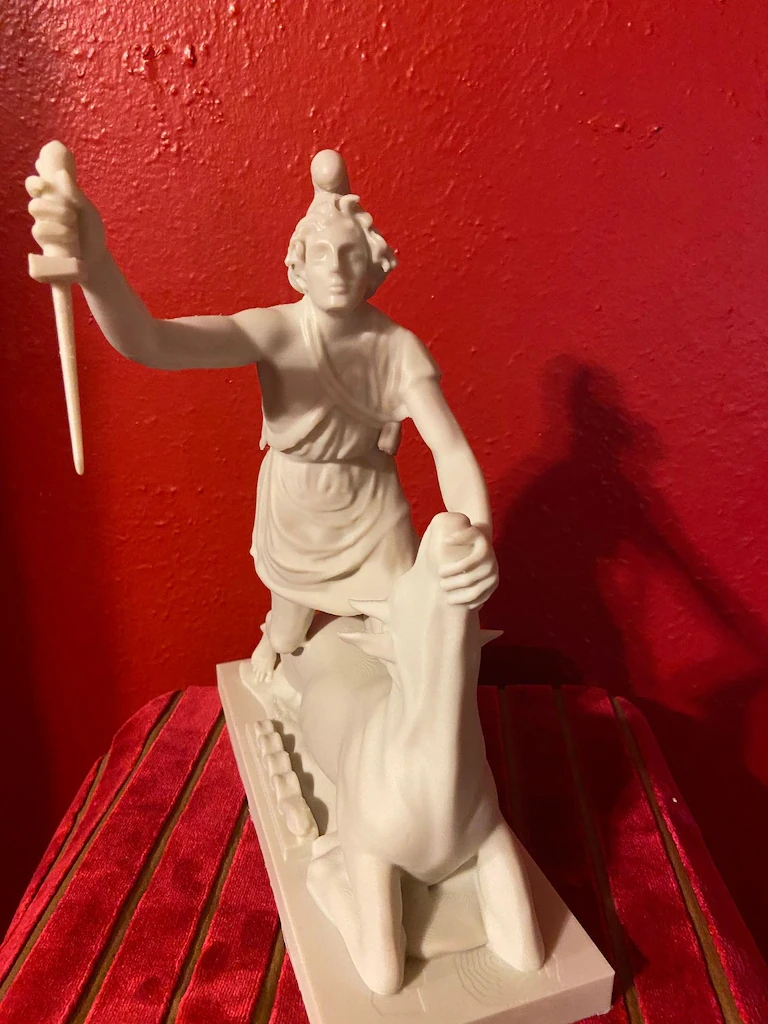
Our sculptor at Hephaisteion dedicated significant time and effort to faithfully recreate every intricate detail of the original statuette, using the Chiaramonti Hecate statue from the Capitoline Museums, which is the authentic (though dismembered) source from which the Hecate Triformis statuette was derived. Our sculptor created four models to choose from: one with six arms, another where two extensors emerge from the biceps, another with three arms, and one without arms, as seen in the Hecate of Chiaramonti at the Vatican Museums.
Hecate’s influence also persisted in Neoplatonic tradition, where the advisor to Emperor Julian, Maximus of Ephesus, a Neoplatonic philosopher from the Syrian school, regarded her as a vital cosmic force connecting the divine with the material.
This high-quality replica embodies the essence of the original sculpture, making it a perfect addition to any collection, particularly for those interested in the worship of the goddess, ancient art, history, and the immortal legacy of the Divine.
All our designs are high quality printing, environmentally friendly materials. Perfect finishes, very careful.
Pieces created with a high level of detail, durable products and great care when packaging