
$45.00 +tax
CHOOSE CHARACTERISTICS AND QUANTITY
PRODUCT DESCRIPTION
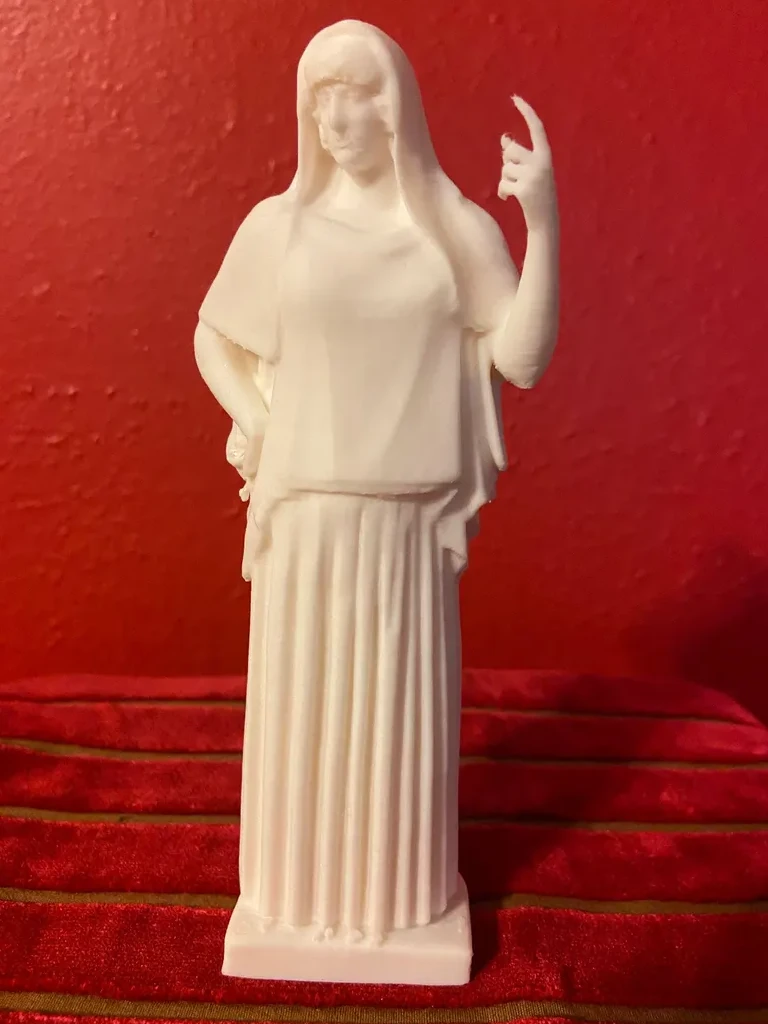
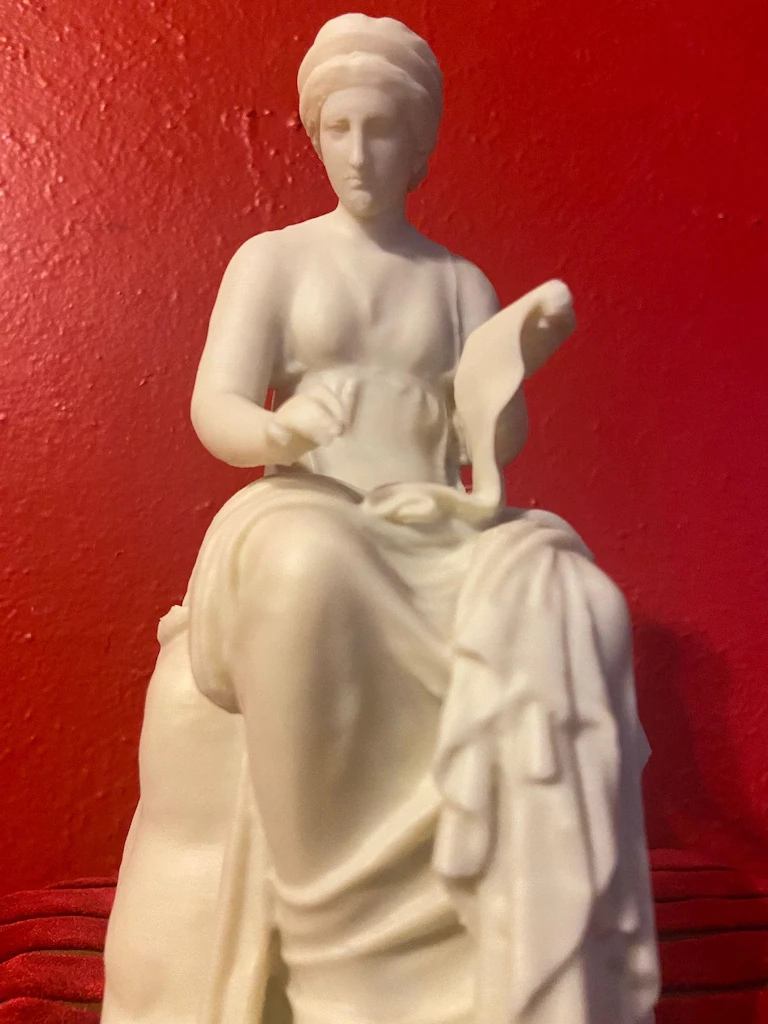
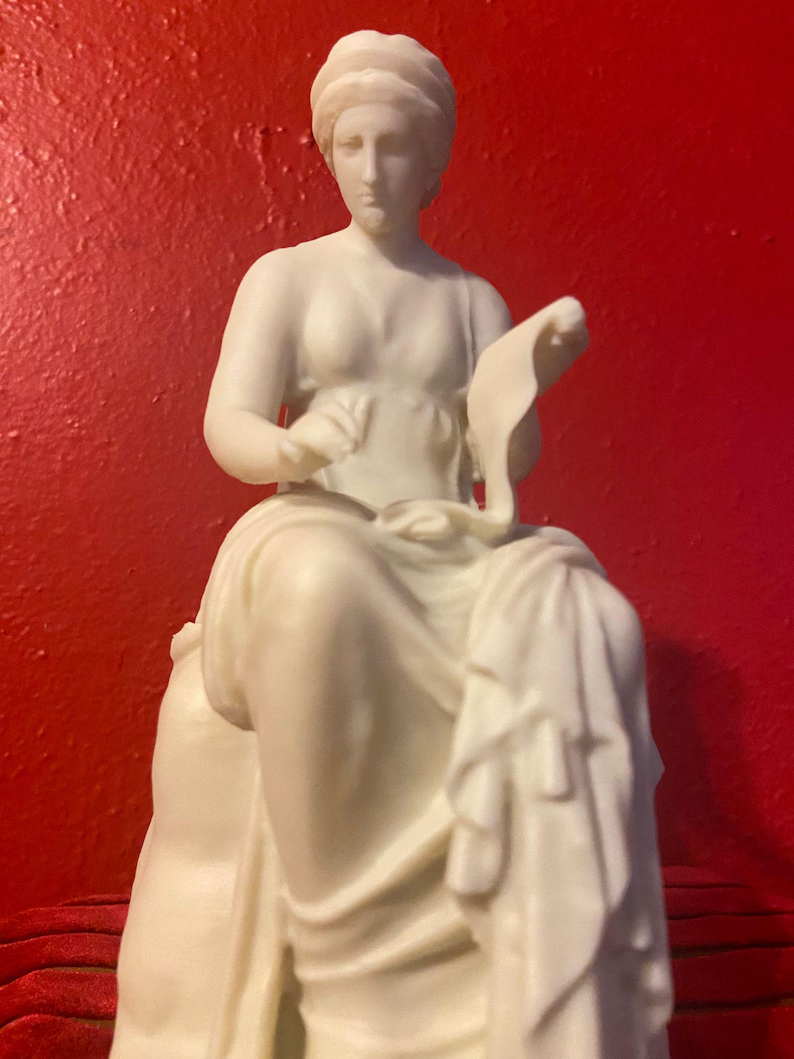
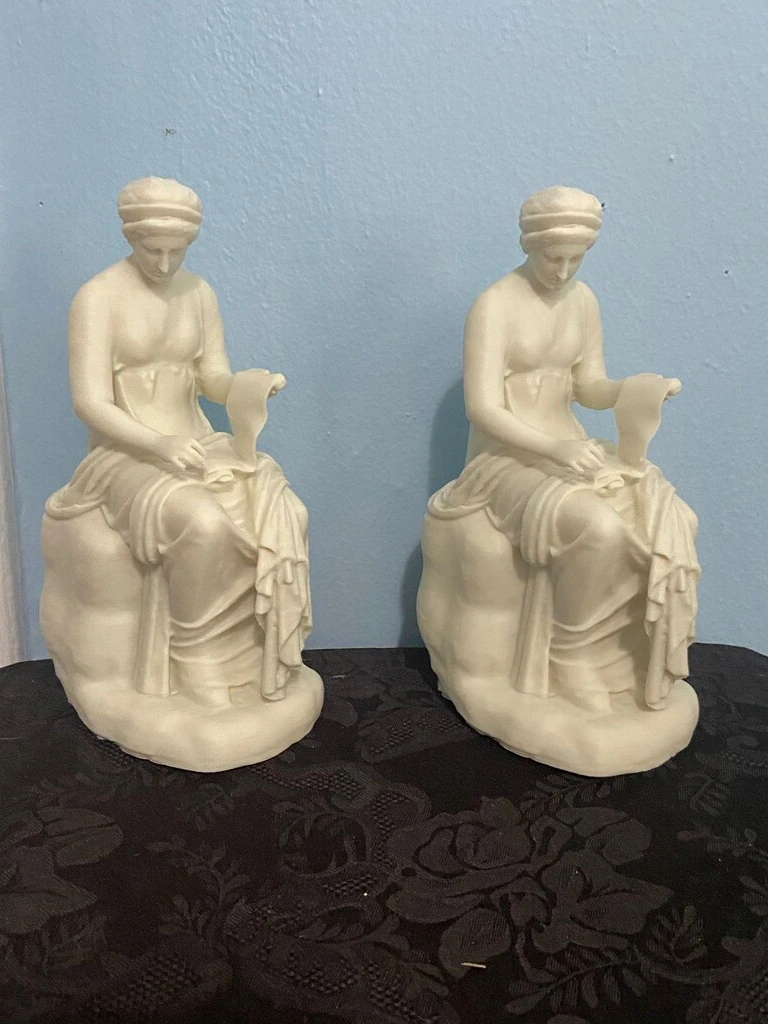
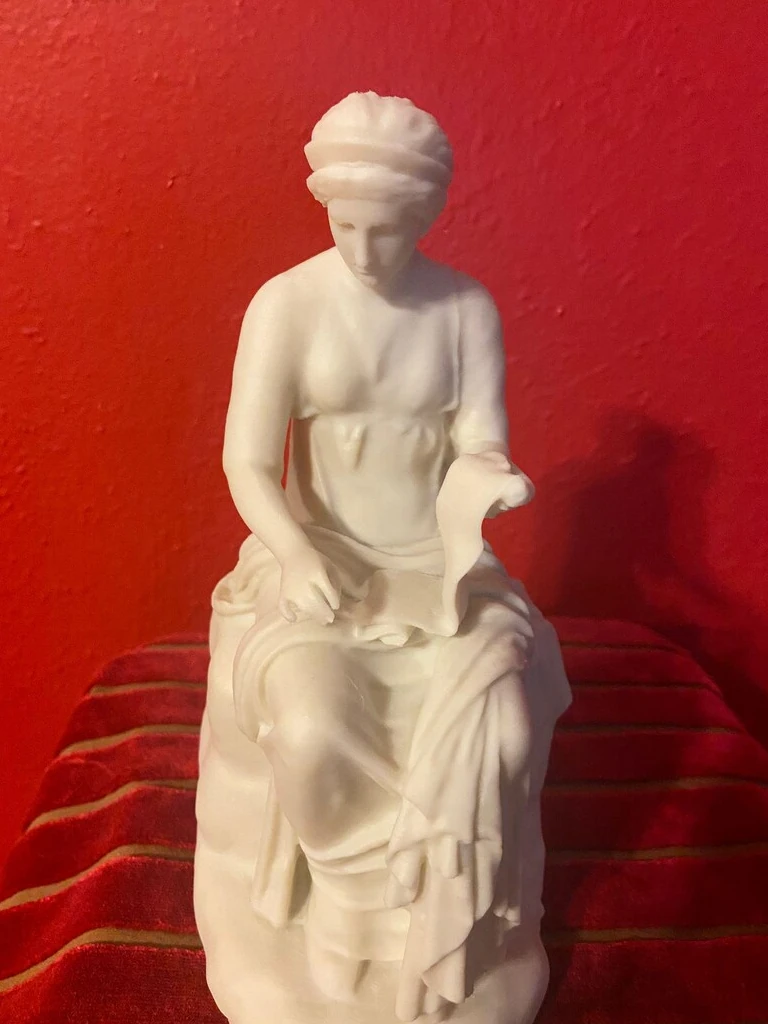
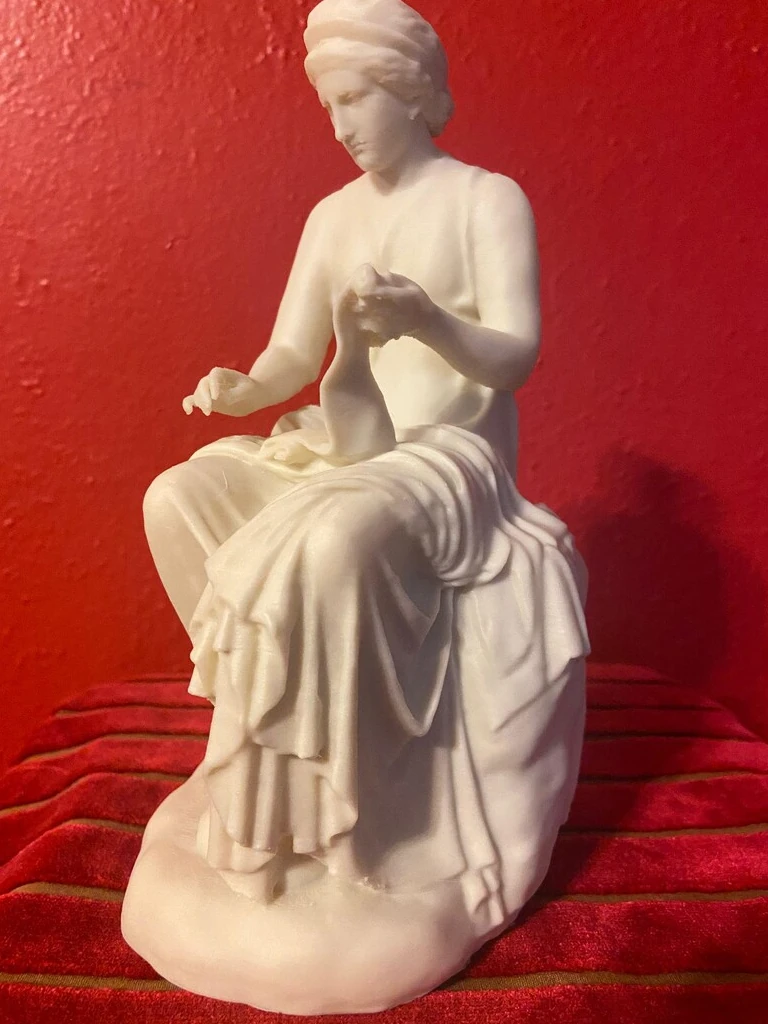
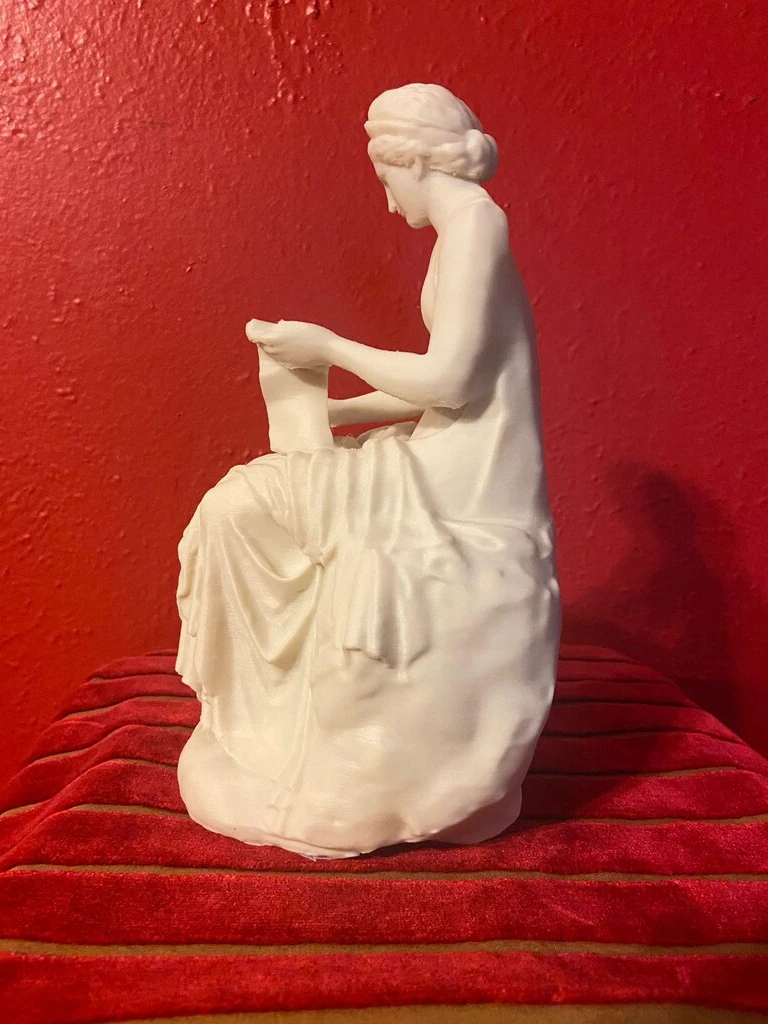
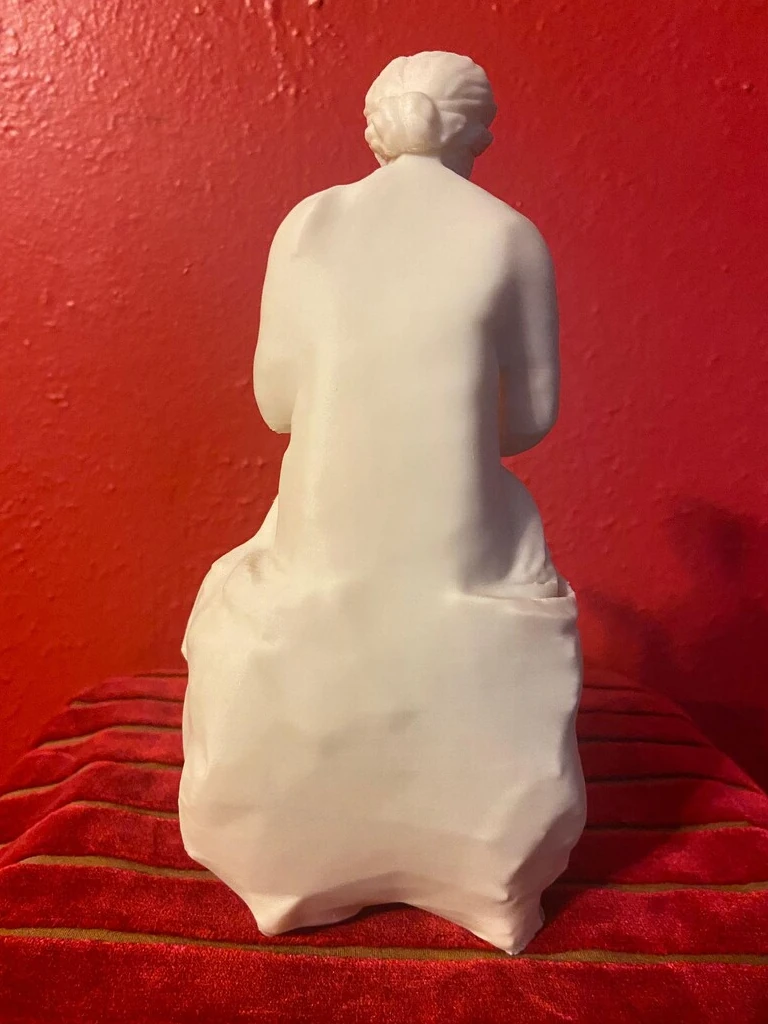
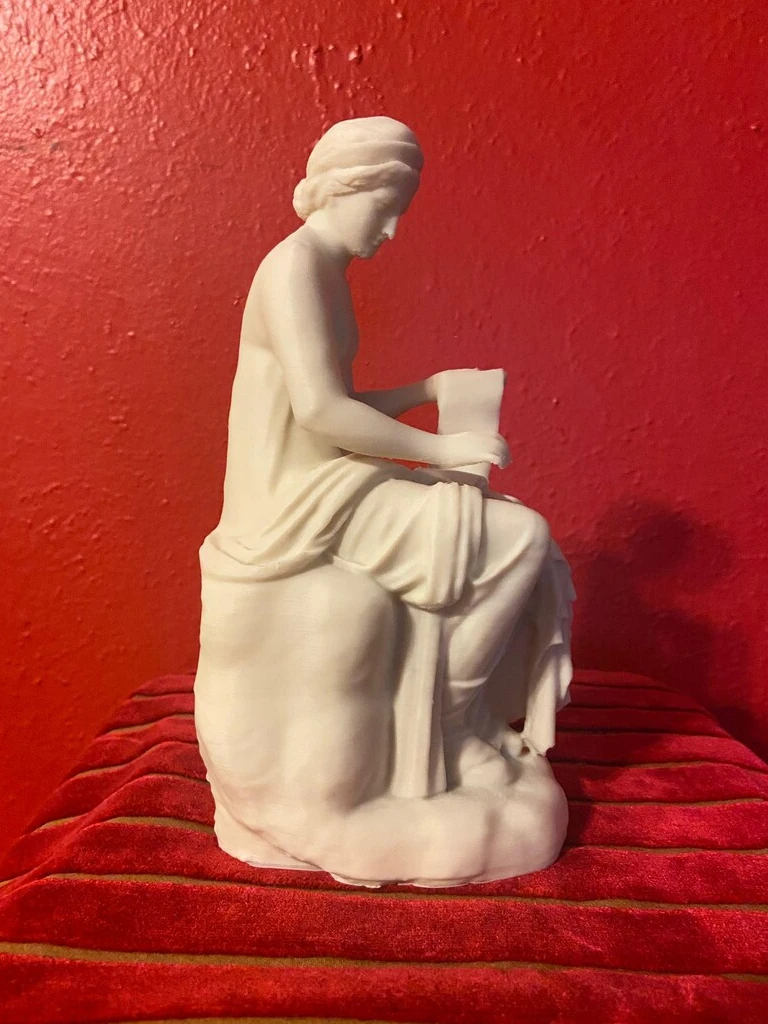
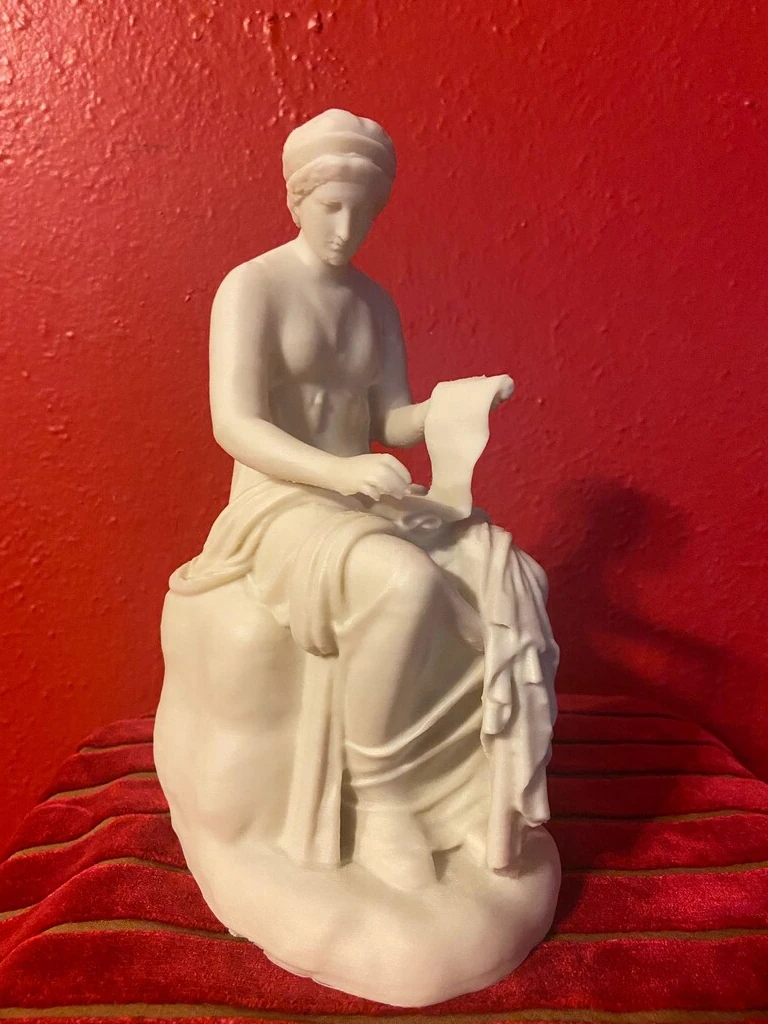
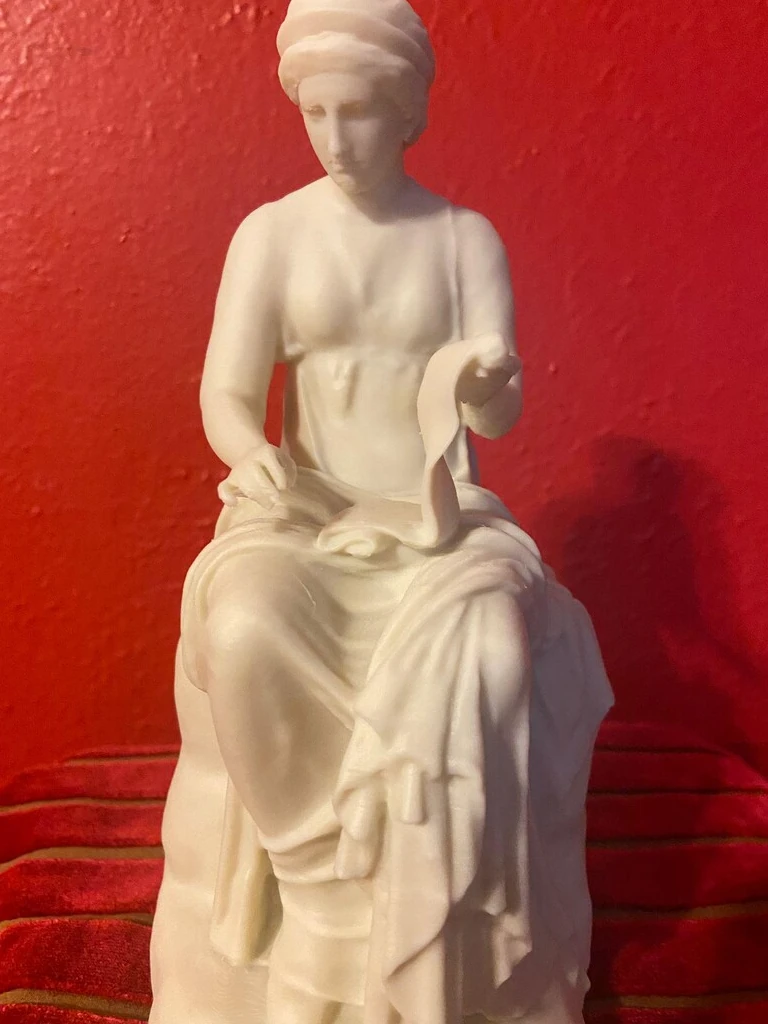
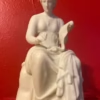
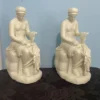
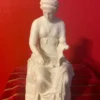
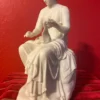
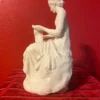
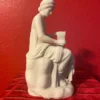
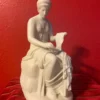
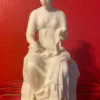
The statue of Clio, the Muse of History, stands with dignity among the sculptures in the Hall of the Muses. Carved in marble and part of a sculptural ensemble discovered in 1774 at the ancient villa of Gaius Cassius near Tivoli, this figure serenely represents the muse responsible for preserving the memory of past events. The sculpture is a Roman copy inspired by a Hellenistic original from the 3rd century BCE, although it was partially restored in the 18th century by Neoclassical artists who reinterpreted certain features according to the tastes of the time. Clio is shown holding a rolled scroll in her hands, symbol of historical records, and her thoughtful expression suggests contemplation and wisdom. Her posture is elegant yet restrained, with a long tunic that falls in soft folds, lending her a solemn, instructive presence in keeping with her role as the divine chronicler. Soon, we will complete and offer replicas of the full sculptural ensemble of the Muses and Apollo, whether for ritual use or to recreate the hall in your own home. At the center of this group stands the majestic figure of Apollo Musagetes, leader of the Muses’ chorus. Clothed in a long tunic and holding a lyre decorated with the figure of the flayed satyr Marsyas, Apollo represents not only music and poetry but also the intellectual harmony that unites the Muses. This statue, like those of the Muses, is based on a Greek original from the 3rd century BCE, although it survives today in the form of Roman replicas restored in the 18th century. Arranged along the walls, the statues of seven Muses appear in varied poses, each identifiable by her symbolic attributes:
Melpomene, Muse of tragedy, holds a tragic mask and an actor’s staff, evoking the drama and emotional intensity of classical theater.
Thalia, Muse of comedy, appears with a smiling mask and a crown of ivy, suggesting lightness, satire, and celebration.
Polyhymnia, Muse of pantomime, adopts a reserved, meditative stance with a finger to her lips, alluding to the art of expressive silence and gesture.
Erato, Muse of love poetry and mimicry, is shown with a lyre or cithara, representing desire, harmony, and tenderness.
Calliope, Muse of epic poetry, stands in a majestic pose, holding a scroll or tablet symbolizing great heroic tales and foundational narratives.
Terpsichore, Muse of choral lyric poetry and dance, holds a lyre and seems to move with restrained grace, embodying rhythm and cadence.
To complete the traditional ensemble of the nine Muses, two additional statues were added in modern times:
Urania, Muse of astronomy and didactic poetry, comes from 4th-century BCE Greek art and is depicted with a celestial globe or compass, guiding seekers through the mysteries of the cosmos.
Euterpe, Muse of music,especially the flute, is inspired by 3rd-century BCE Greek art and appears serene and melodic.
Imagine antiquity, when such statues were placed as sources of inspiration in places like the Library of Alexandria or the Library of Pergamon. The Library of Alexandria, originally a small annex to the research center called the Museum (literally “temple of the Muses”), was the first known institution of its kind. The Muses, daughters of Zeus and Mnemosyne (the goddess of memory), accompanied Apollo and were considered in ancient tradition to be the protectors and inspirers of the arts, including history, which was already regarded as an art form. As described above, there were nine Muses: Calliope, Clio, Erato, Euterpe, Melpomene, Polyhymnia, Terpsichore, Thalia, and Urania, each safeguarding a specific art. In Alexandria, they had their own temple, where the greatest minds of the Western world came to work from the 3rd century BCE onward, under the patronage of the Ptolemies, Greek pharaohs who ruled after the death of Alexander the Great and were notable patrons of the arts and sciences. The directors of the Museum, grammarians, mathematicians, or philosophers, also served as tutors to the pharaohs of the Ptolemaic dynasty. Ptolemy I Soter began the construction of the Museum and Library, which were completed by Ptolemy II Philadelphus, a major benefactor of science and the arts, whose tutor was Zenodotus of Ephesus. Apollonius of Rhodes was tutor to Ptolemy III, and so on. This system ensured that the rulers remained deeply invested in the upkeep of the Museum and the growth of the library. Picture the scholars working in the Museum and Library, inspired by the divine presence of the Muses, striving day and night to overcome “ignorance” the true evil of humanity, and unlock the doors of knowledge. Through the halls adorned with statues, capitals, and columns, passed great thinkers like Hero, Aristarchus, Euclid, Archimedes, and even historical figures such as Julius Caesar and Cleopatra. Sciences, mathematics, and history were seen as divine inspirations from the Muses, just like religion. These sacred places were not open to everyone. The scholars who brought prestige to the Museum and Library received housing, meals, scribes, salaries, and tax exemptions. Their only duty was to “worship the Muses,” that is, to honor the wisdom that flowed from them. At the call of the Ptolemies, scholars came not only from the Greek world but from every corner of the known world. Among them was Zenodotus of Ephesus, who, under the sacred columns of the Museum, invented the alphabetized cataloging system used to organize the thousands of documents stored in the library. A specialist in Homer, he was also responsible for acquiring the poet’s original works. Also working there was Eratosthenes of Cyrene, geographer, mathematician, music theorist, and astronomer, who calculated the Earth’s circumference using only a stick and a rope, erring by just 300 kilometers (186.411 miles). Inspired by Euterpe, Polyhymnia, and especially Clio and Urania, he accomplished this remarkable feat. Hipparchus of Nicaea cataloged over a thousand stars, calculated the solar year with only a seven-minute margin of error, invented trigonometry, and designed the forerunner to the theodolite to measure position and magnitude. Aristarchus of Samos was the first known astronomer to propose a heliocentric model of the universe, anticipating the geocentric system of Claudius Ptolemy and laying the groundwork for discoveries that wouldn’t be revisited until the 16th century. Hero of Alexandria invented a system to open the temple doors of Amun (Ammon) using the world’s first steam engine, the aeolipile. Also in residence were Euclid, the great mathematician and geometer, and Herophilos of Chalcedon, a Greek physician considered one of the first anatomists. He conducted systematic dissections of human cadavers and located the seat of intelligence in the brain, debunking the ancient Egyptian belief that the soul resided in the heart, hence their practice of discarding the brain during mummification. Galen of Pergamon, nearly a divine figure in medicine, was also studied in Alexandria. All these scholars, scientists, mathematicians, and physicians remained apart from politics and religious conflict. Their sole devotion was to the Muses, that is, to knowledge and science. Within the walls of the Museum and Library, the works of Aristotle were preserved, and major texts, including the Torah and even the Bible, were translated into Greek by Hellenized Jewish scholars.
All our designs are high quality printing, environmentally friendly materials. Perfect finishes, very careful.
Pieces created with a high level of detail, durable products and great care when packaging