$25.00 – $80.00Price range: $25.00 through $80.00
CHOOSE CHARACTERISTICS AND QUANTITY
PRODUCT DESCRIPTION
The Good Shepherd is an ancient artistic representation whose origins can be traced back to the religious and cultural traditions of ancient Greece, centuries before the appearance of its later interpretations. The image of a youthful shepherd carrying a ram or sheep across his shoulders was a familiar subject in Hellenic artwork, where it represented protection, pastoral life, devotion, and the relationship between humanity, animals, and the Divine. This ancient Greek sculptural tradition, known as the Kriophoros, meaning “Ram-Bearer,” continued to flourish throughout the Hellenistic and Roman periods, eventually becoming one of the most recognizable pastoral images of the ancient Mediterranean world.
In ancient Greek religion, the ram-bearing figure was associated with religious offerings, purification, protection, and the safeguarding of communities. One of the most important divine figures connected with this tradition was Hermes, the Olympian god of travelers, boundaries, commerce, communication, and the protection of shepherds and their flocks. As Hermes Kriophoros, the god was represented carrying a ram upon his shoulders, reflecting his protective and pastoral attributes. The ram was also an important sacrificial animal in ancient Greek religious ceremonies, making the image meaningful within the sacred traditions of Hellenic society.
The association between Hermes and the ram-bearing figure is particularly significant in the ancient Greek city of Tanagra in Boeotia. According to the Greek traveler and geographer Pausanias, writing during the 2nd century CE, the inhabitants of Tanagra honored Hermes Kriophoros for protecting their city from a plague. The god was believed to have averted the disaster by carrying a ram around the city walls. In remembrance of this divine protection, the inhabitants established a cult dedicated to Hermes Kriophoros, and a statue attributed to the celebrated Greek sculptor Kalamis was erected in his honor. During the annual festival of Hermes, a young man was selected to carry a ram around the city, commemorating the god’s protection and reinforcing the sacred relationship between the deity and the community.
The Kriophoros motif also appeared in other Greek artistic and religious contexts, including representations of worshippers carrying sacrificial animals. Its meaning therefore extended beyond any single deity, reflecting broader Hellenic traditions of religious devotion, guardianship, and ritual offerings. The artistic composition of the ram-bearing youth became particularly influential because of its simplicity, balance, and symbolic power. Over the centuries, Greek and Roman sculptors continued to reproduce and reinterpret this familiar image, preserving its classical characteristics while adapting it to different cultural and religious environments.
The Good Shepherd sculpture reproduced by Hephaisteion is inspired by an ancient marble statuette dating to approximately 280–290 CE, attributed to Anatolia, in present-day Turkey, during the Late Roman period. The original sculpture is preserved at the Cleveland Museum of Art in Cleveland, Ohio, United States, under accession number 1965.241. Measuring approximately 49.5 cm (19.5 inches) in height, the original artwork reflects the continuation of ancient Greek sculptural traditions within the artistic culture of the Roman Empire.
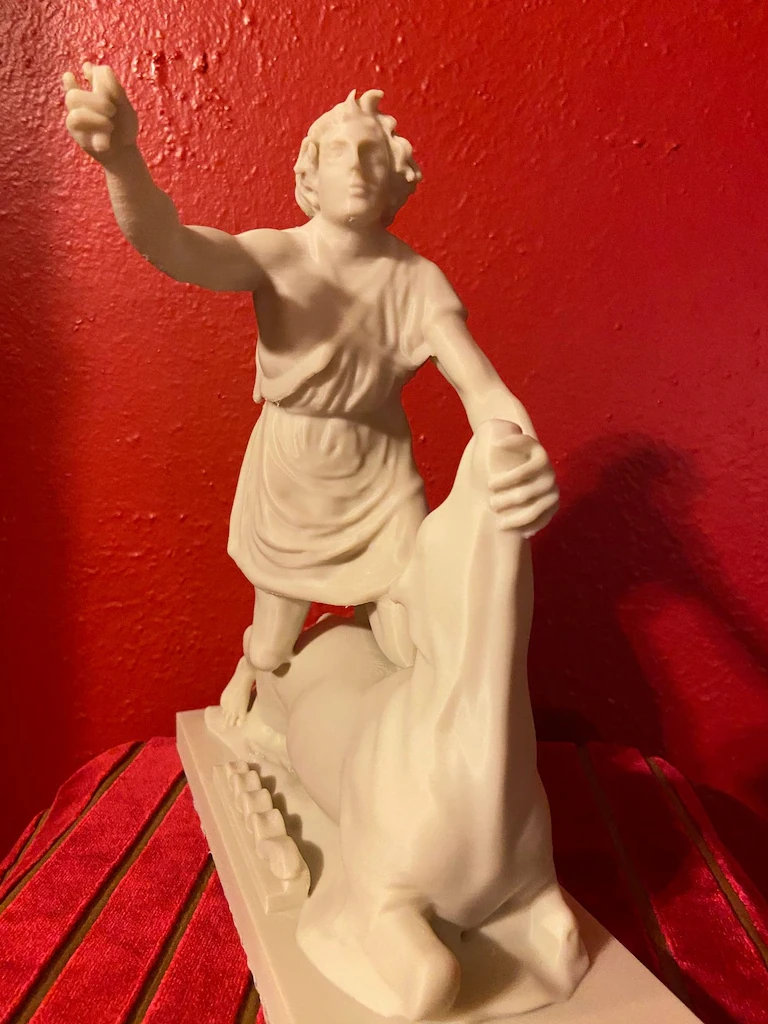
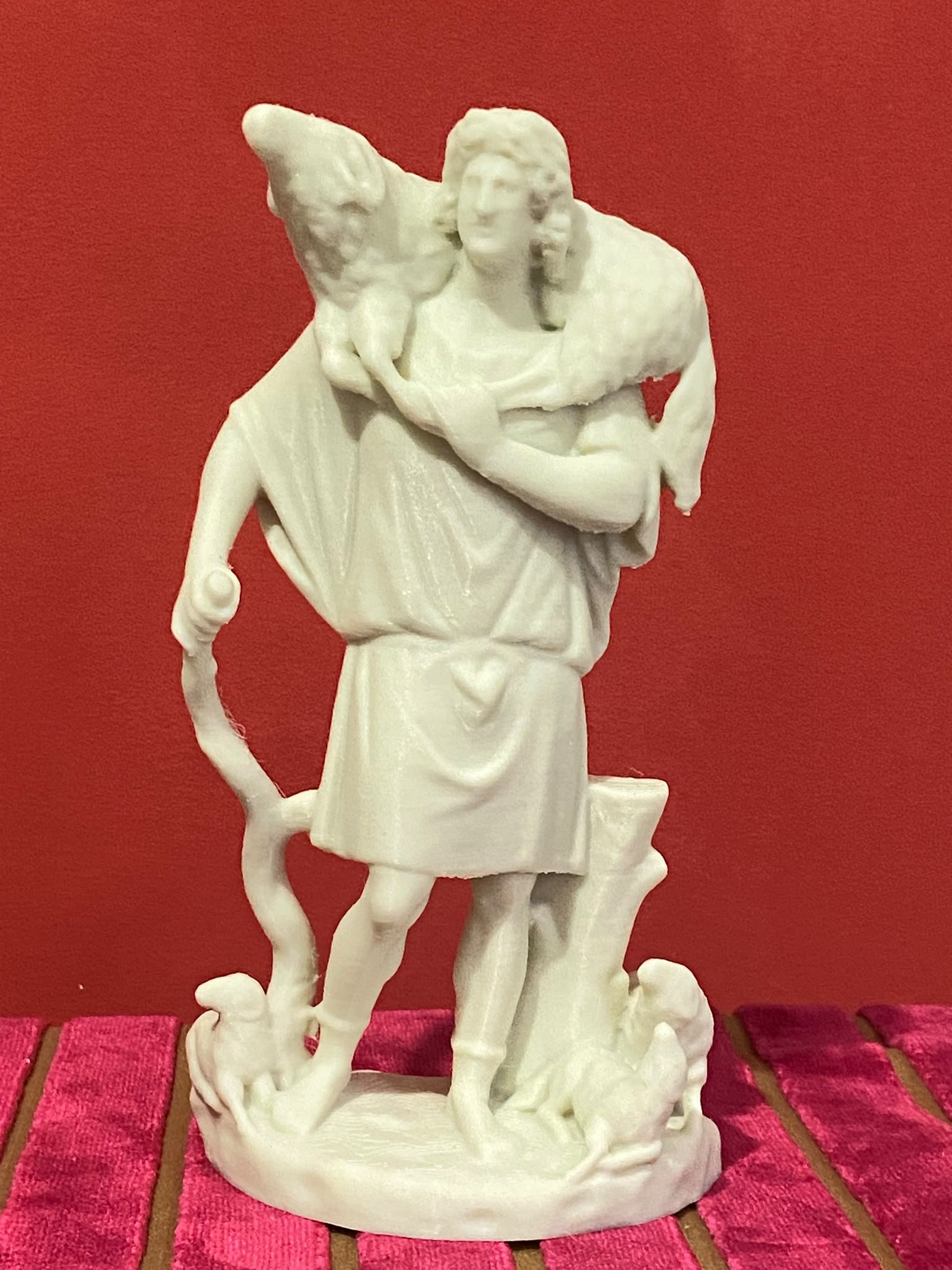
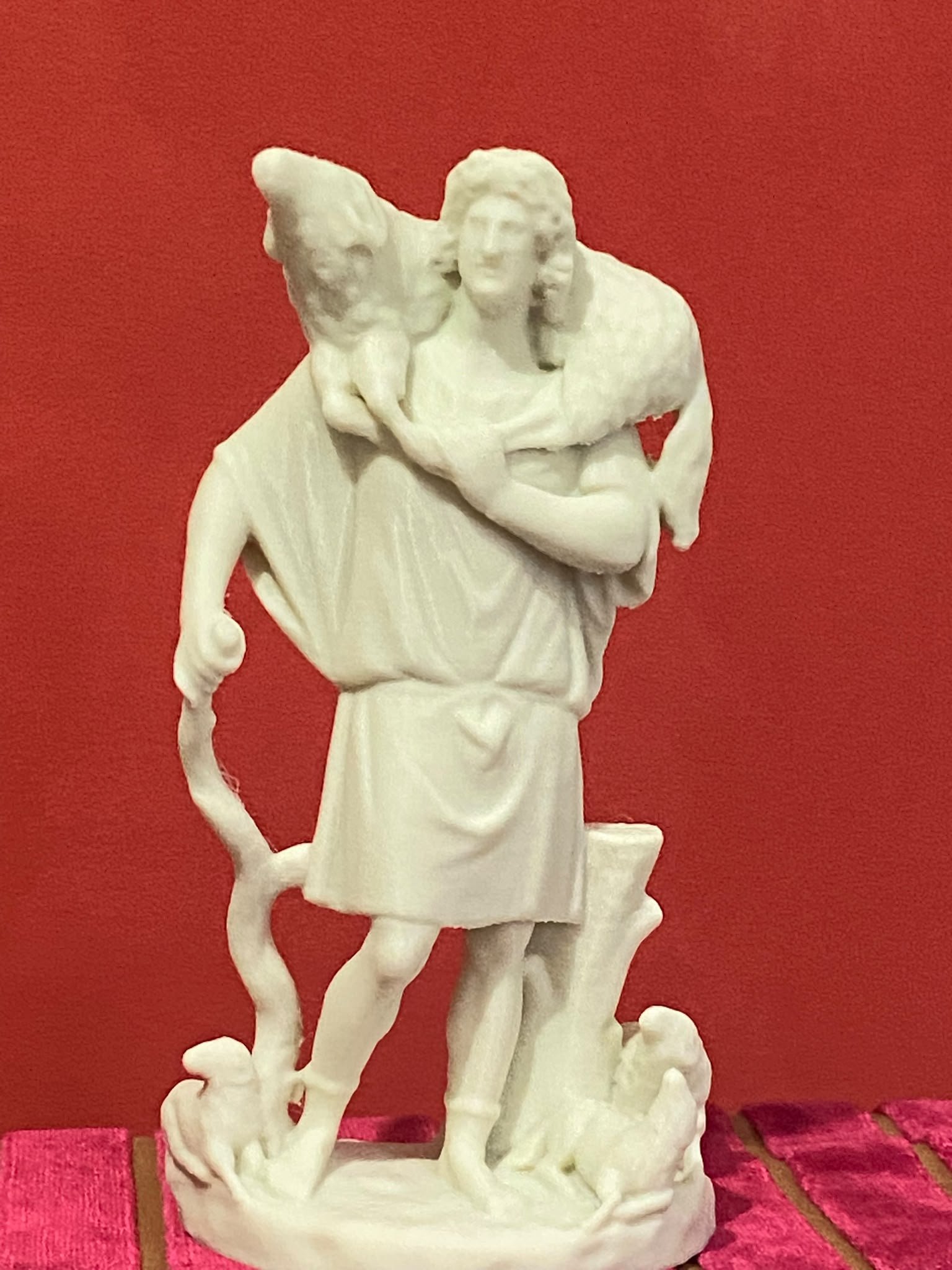
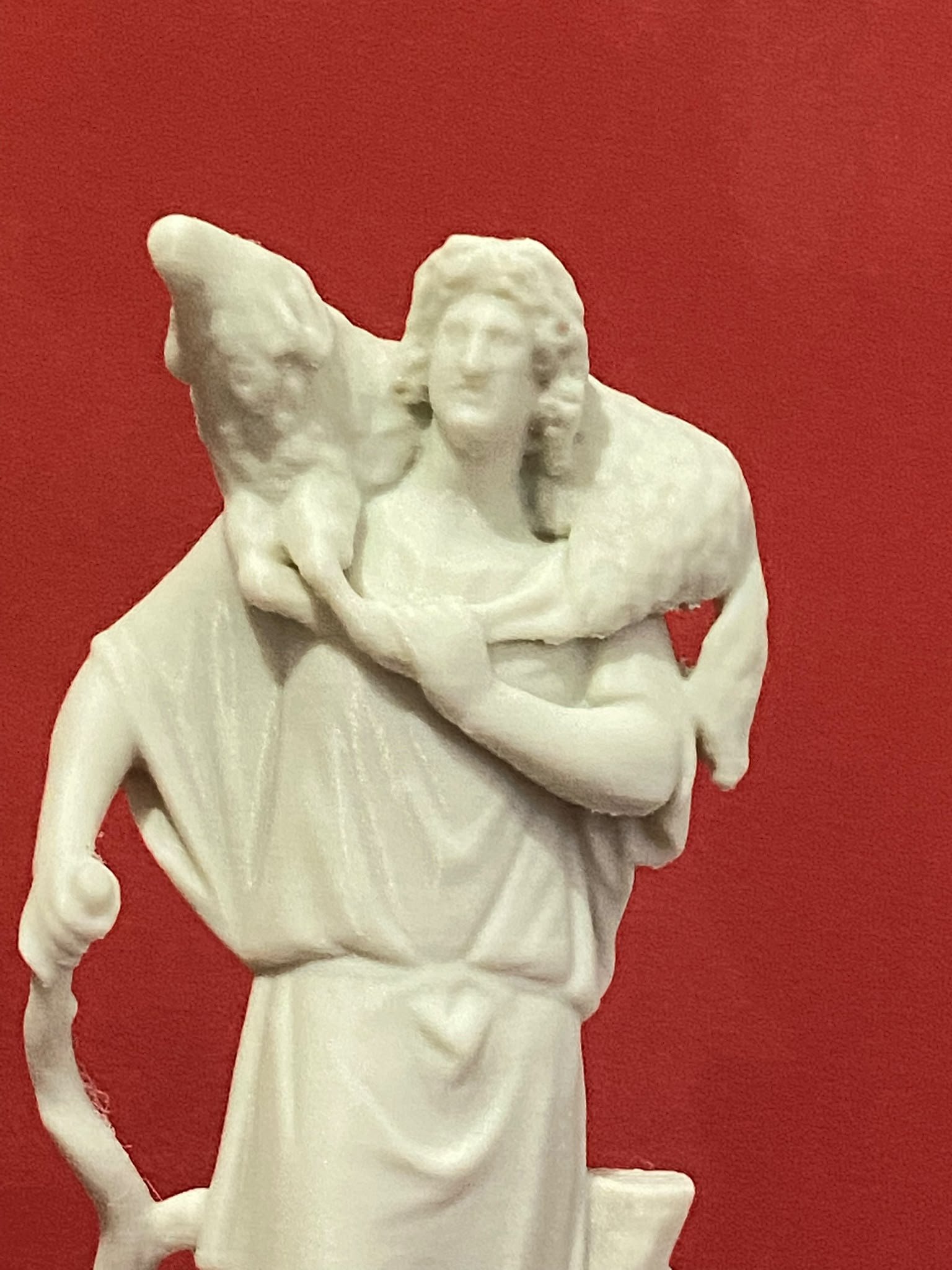
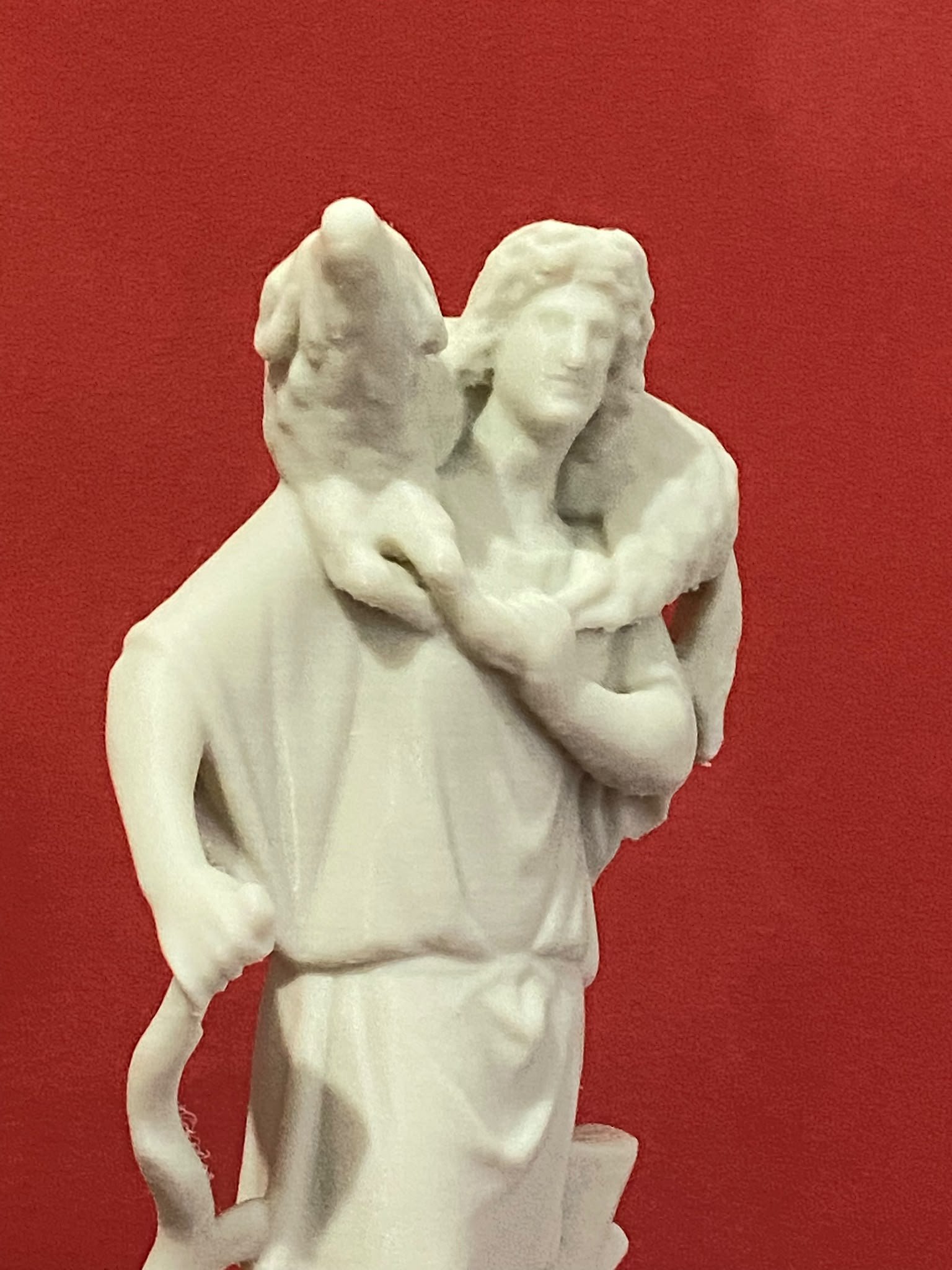
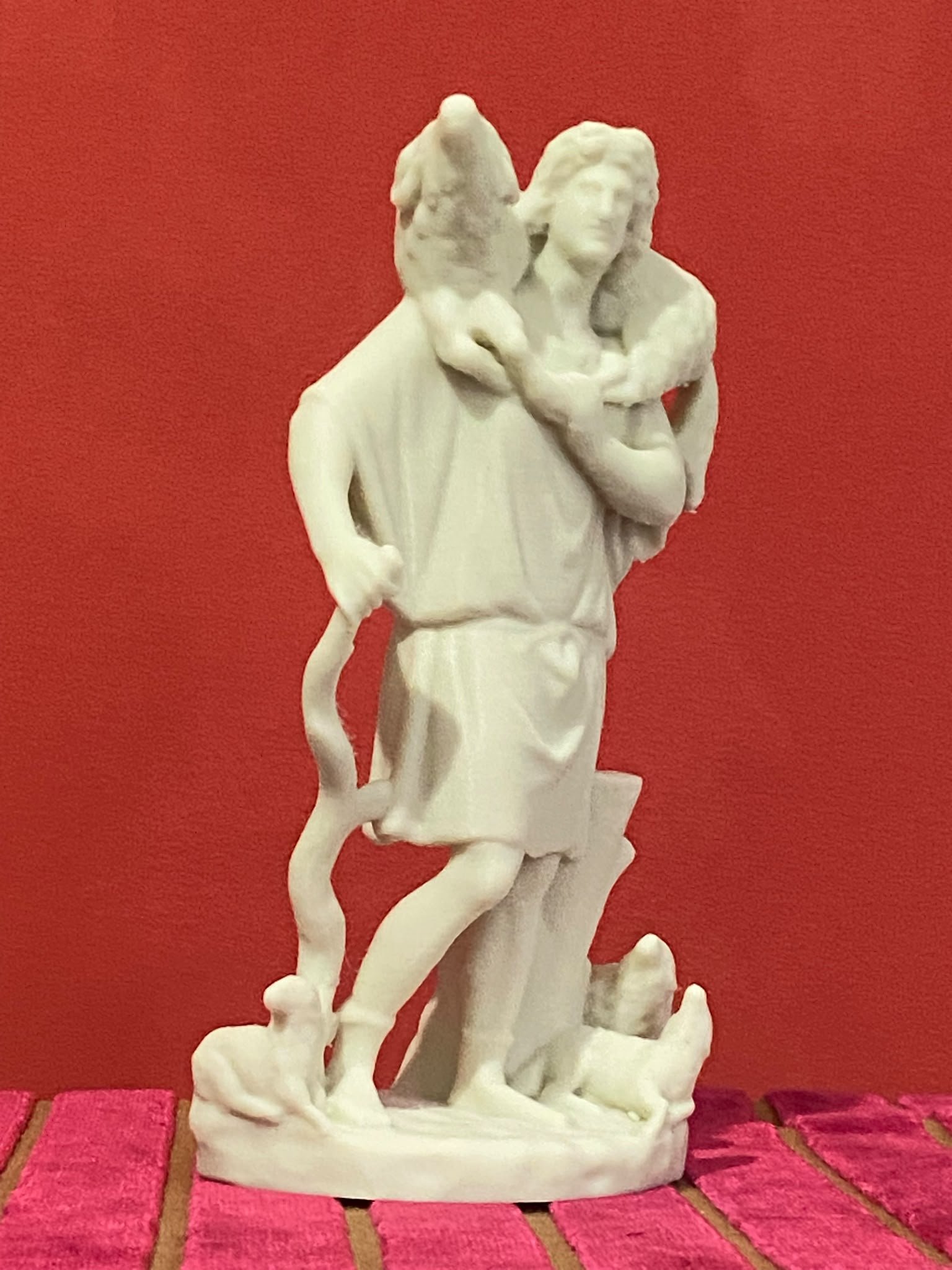
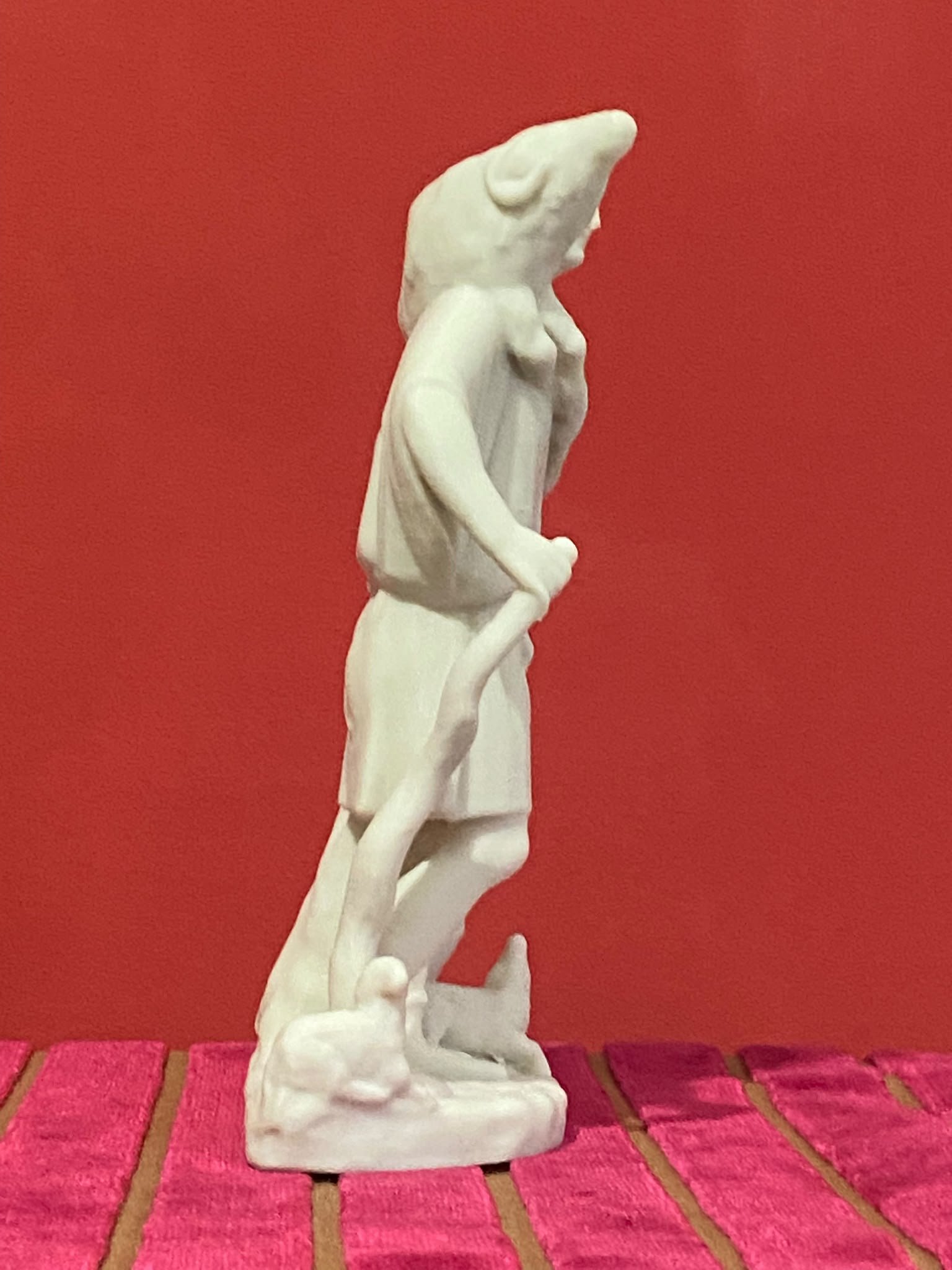
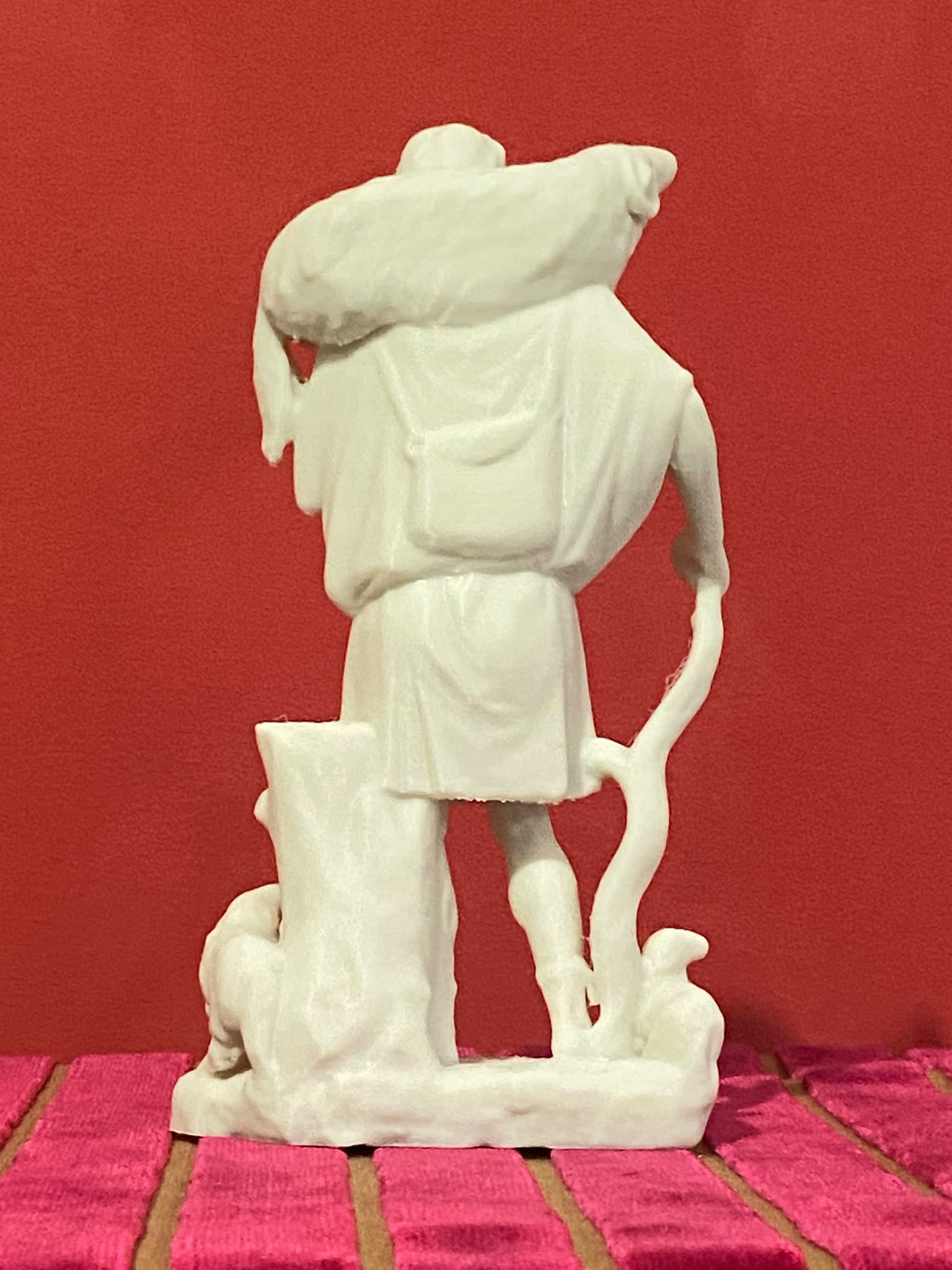
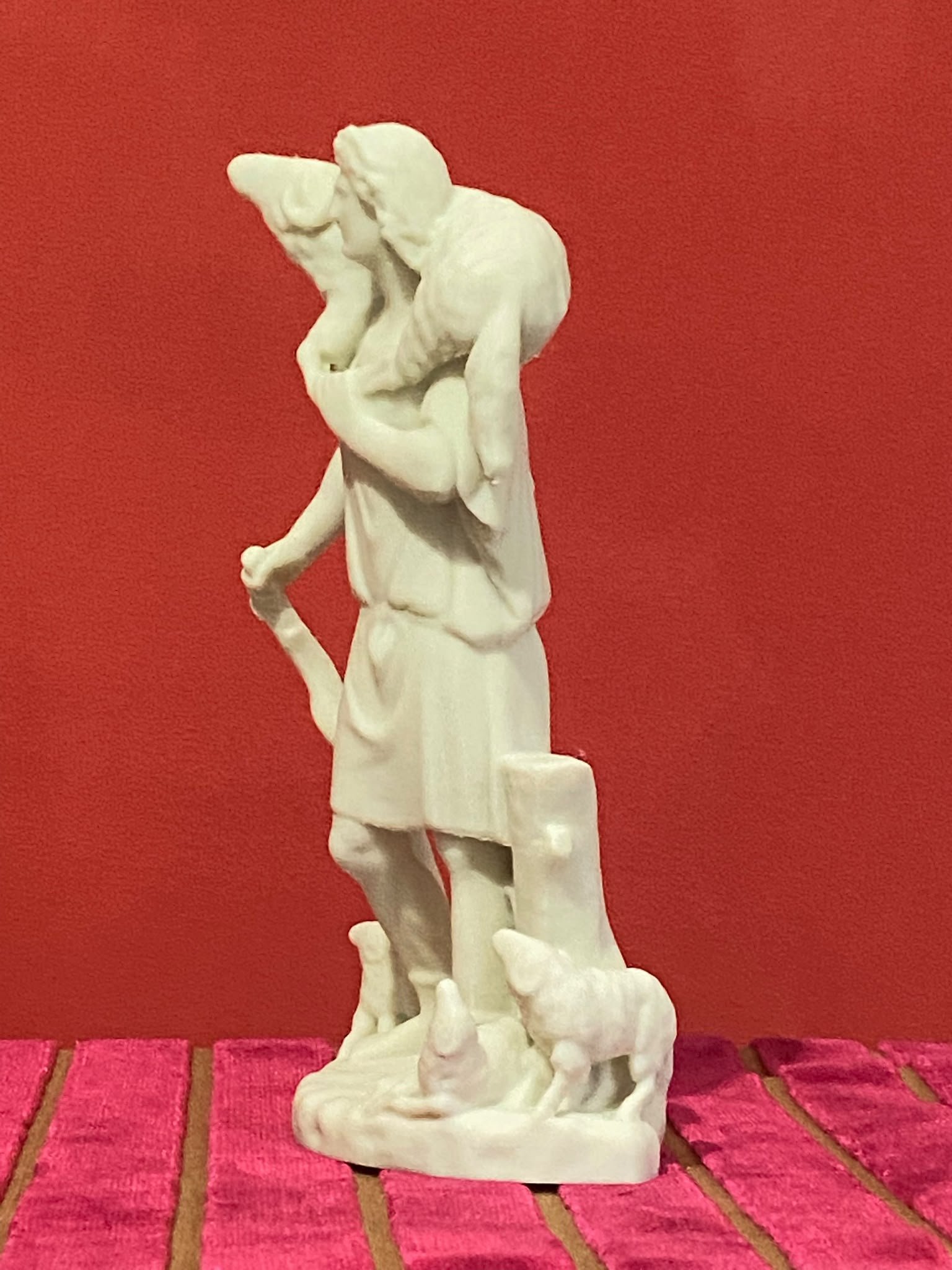
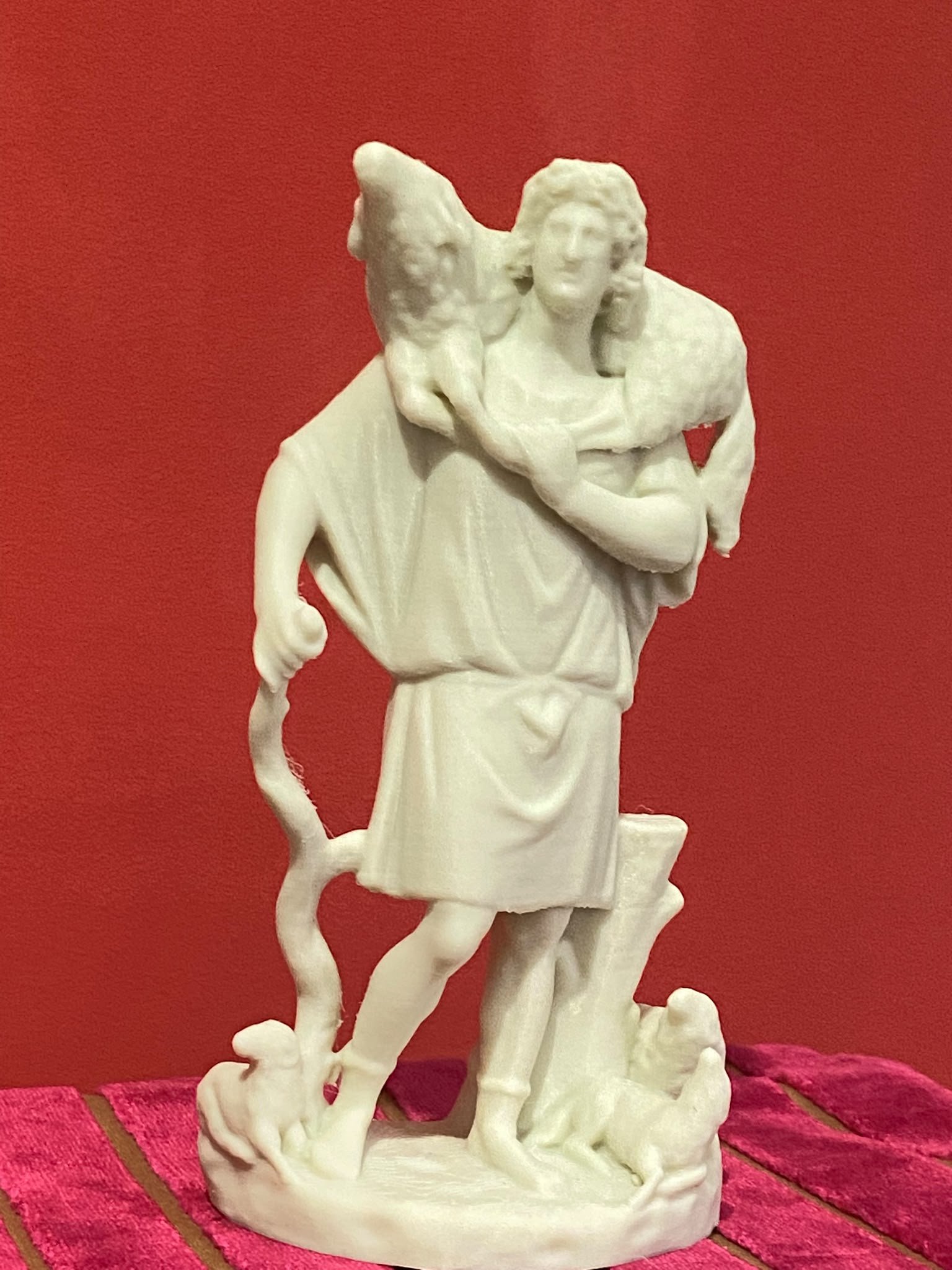
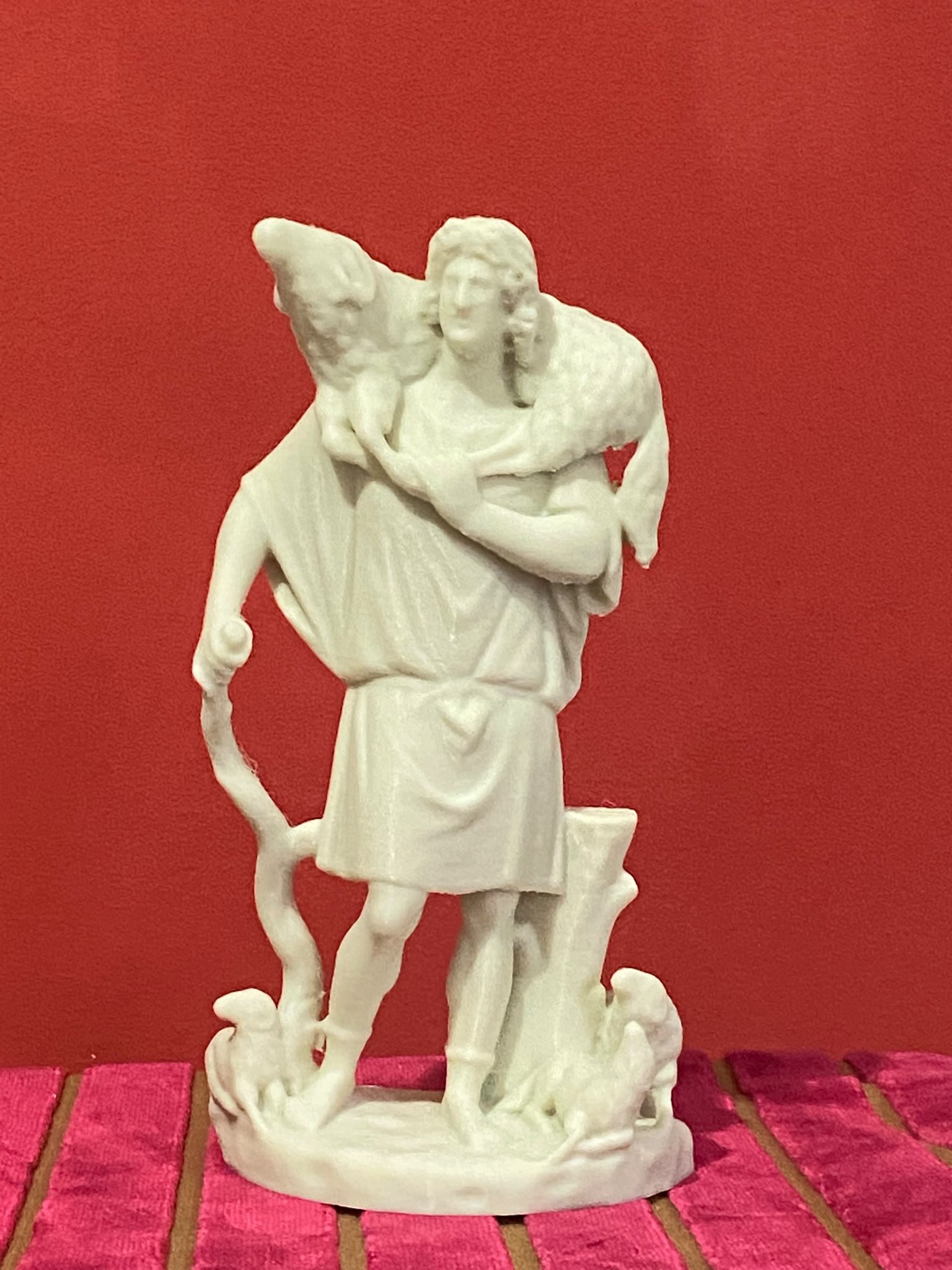
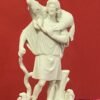
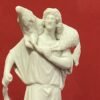
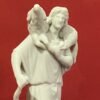
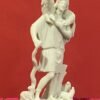
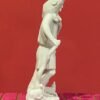
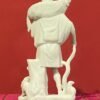
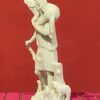
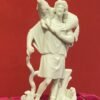
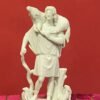
The statue portrays a youthful, beardless shepherd with carefully arranged, curled hair and a peaceful expression. He wears a short tunic, characteristic of pastoral figures in classical Greco-Roman art, and carries a sheep across his shoulders, supporting the animal with his hands. A shepherd’s staff accompanies the figure, while two smaller sheep stand near his feet, completing the composition and emphasizing his role as guardian of the flock. The carefully balanced arrangement of the animals and the shepherd reflects the classical artistic ideals of harmony, proportion, and natural beauty.
The composition preserves the essential characteristics of the ancient Kriophoros tradition, particularly the youthful appearance of the shepherd, the animal resting upon his shoulders, and the peaceful relationship between the human figure and his flock. These elements connect the sculpture to a much older Hellenic artistic heritage that had existed for centuries before the creation of the original Roman-period statuette.
Throughout the ancient Mediterranean world, shepherds occupied an important place in both everyday life and religious symbolism. The protection of flocks was closely connected with prosperity, agricultural abundance, and the well-being of communities. In Greek religion, pastoral protection was associated with several divine figures, including Hermes, Pan, and Apollo, whose cults reflected different aspects of the relationship between the gods, humanity, and the natural world.
Hermes was particularly revered as a guardian of herds and flocks, while Pan, the Arcadian god of shepherds, wild nature, and pastoral music, embodied the untamed and fertile landscapes of the countryside. Apollo also possessed important pastoral associations in Greek mythology and religious tradition. These divine connections demonstrate the importance of shepherding within the spiritual and cultural life of the ancient Hellenic world.
The image of the shepherd carrying a sheep or ram therefore represents much more than a simple scene of rural life. Within its ancient artistic context, it evokes guardianship, responsibility, divine protection, and the preservation of life. Its enduring presence in classical sculpture illustrates how deeply pastoral imagery was embedded in the religious and artistic traditions of the ancient Greeks and Romans.
As the Roman Empire expanded and different religious traditions developed across the Mediterranean, the ancient Kriophoros image continued to be adapted and reinterpreted. Its recognizable composition and powerful symbolism allowed the figure to remain relevant across successive centuries, demonstrating the lasting influence of Hellenic art upon later civilizations.
The original Good Shepherd statuette in the Cleveland Museum of Art is an important example of this artistic continuity. Although created during the Late Roman period, its composition retains the visual language and sculptural characteristics inherited from ancient Greek traditions. The youthful shepherd, the carefully positioned sheep, and the harmonious arrangement of the figures preserve an artistic concept that had already existed in the Mediterranean world for many generations.
Our reproduction of The Good Shepherd stands approximately 18 cm (7.09 inches) tall, making it particularly suitable for personal larariums, home altars, shrines, and collections dedicated to ancient Hellenic and Roman religious traditions. Its compact size allows the sculpture to be displayed alongside representations of Hermes, Pan, Apollo, and other deities associated with pastoral life, protection, and the natural world.
At Hephaisteion, we are dedicated to preserving and celebrating the artistic and religious heritage of ancient civilizations through carefully produced sculptural reproductions. This statue honors the enduring legacy of the ancient Kriophoros tradition and the remarkable artistic achievements of the Hellenic and Roman worlds.
This high-quality reproduction embodies the peaceful beauty and timeless symbolism of the original sculpture, making it a distinctive addition to any collection, particularly for those interested in ancient Greek religion, Roman art, classical sculpture, Hellenic traditions, and the immortal legacy of the Divine.
All our designs are high quality printing, environmentally friendly materials. Perfect finishes, very careful.
Pieces created with a high level of detail, durable products and great care when packaging