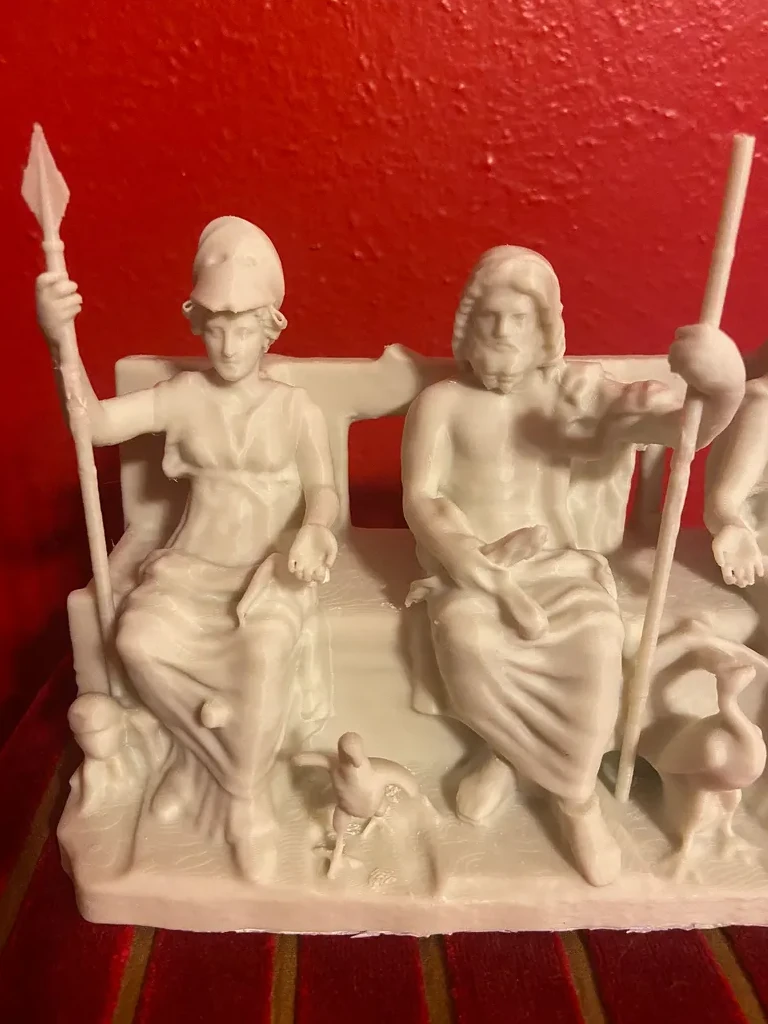
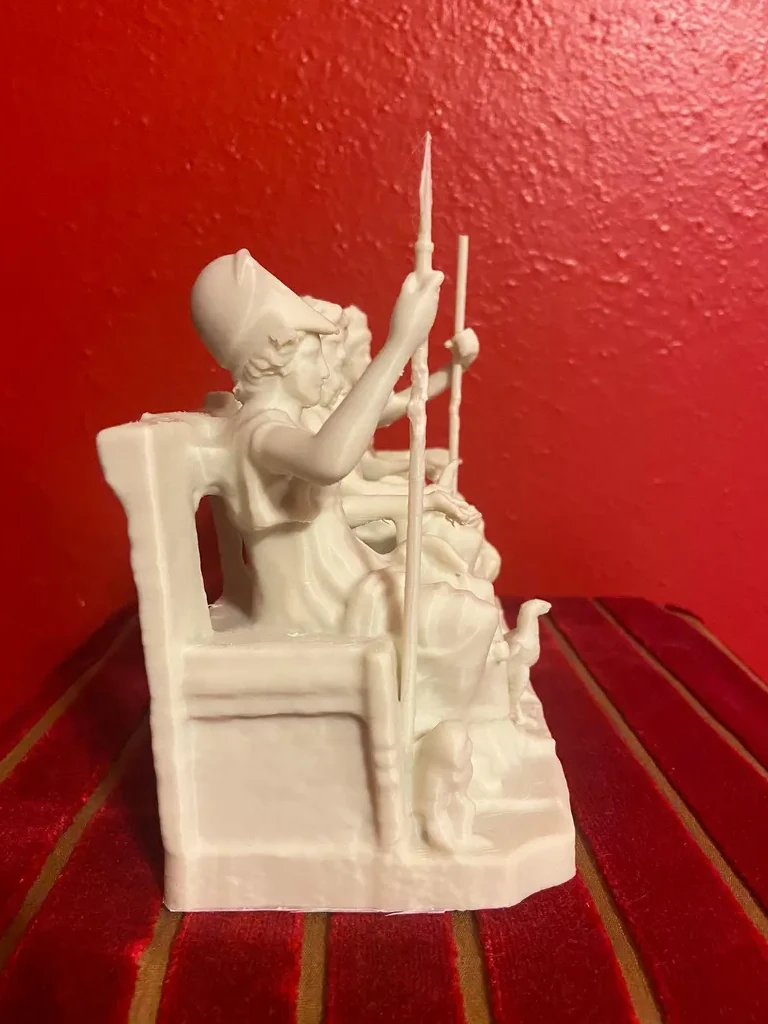
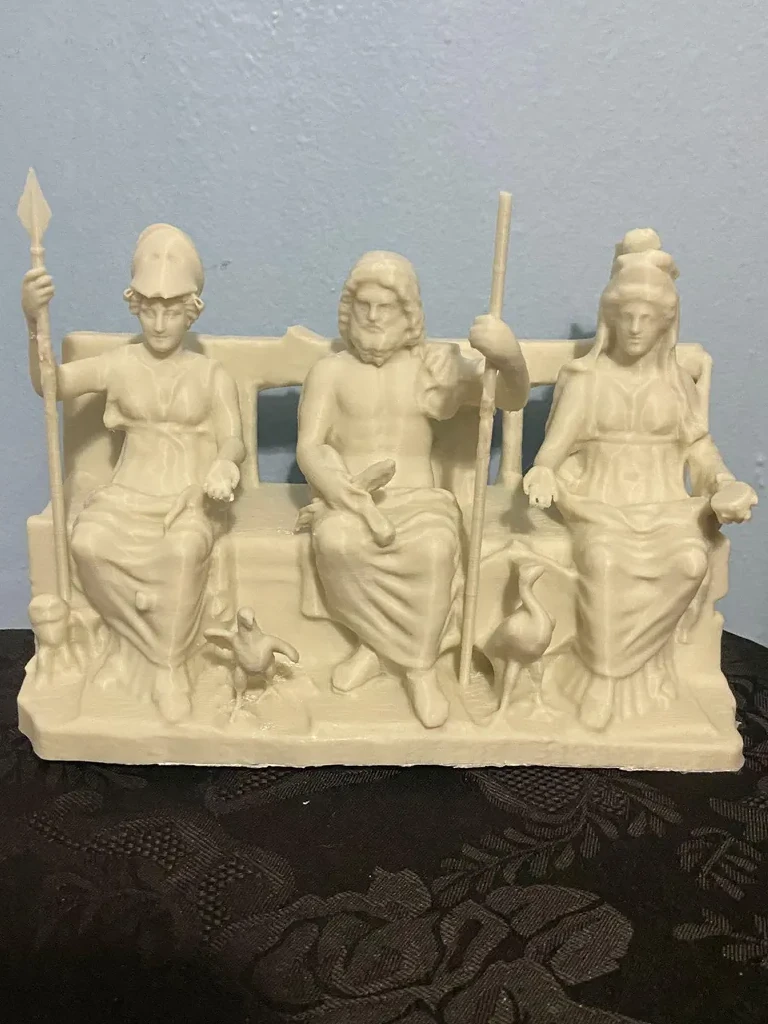
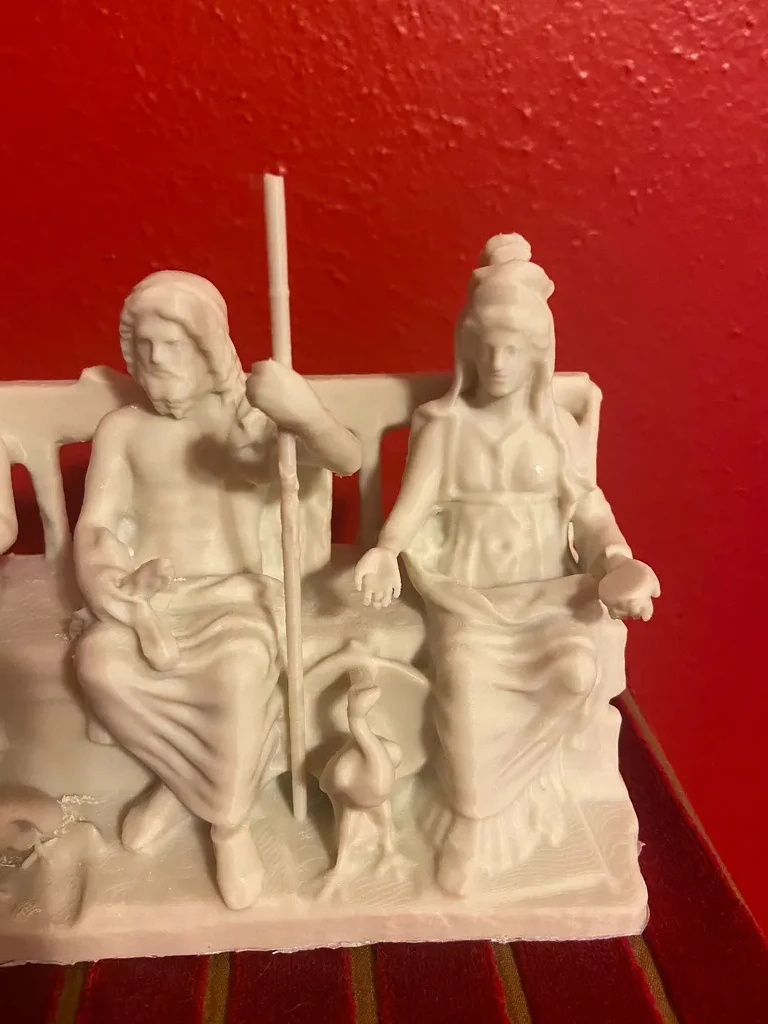
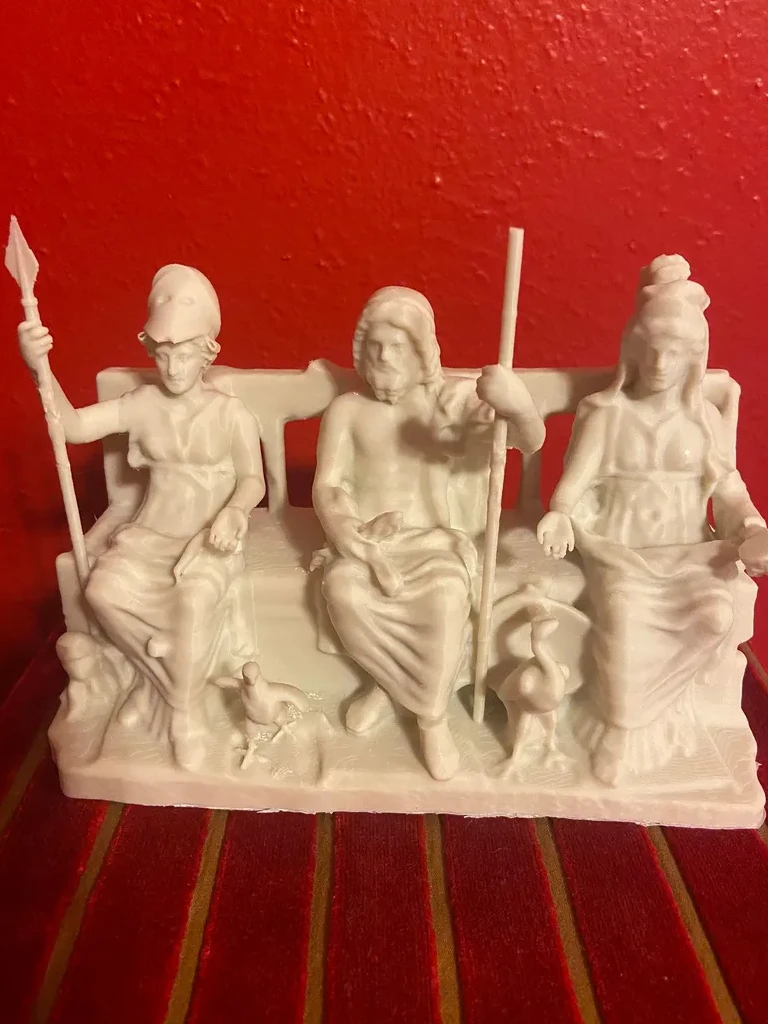
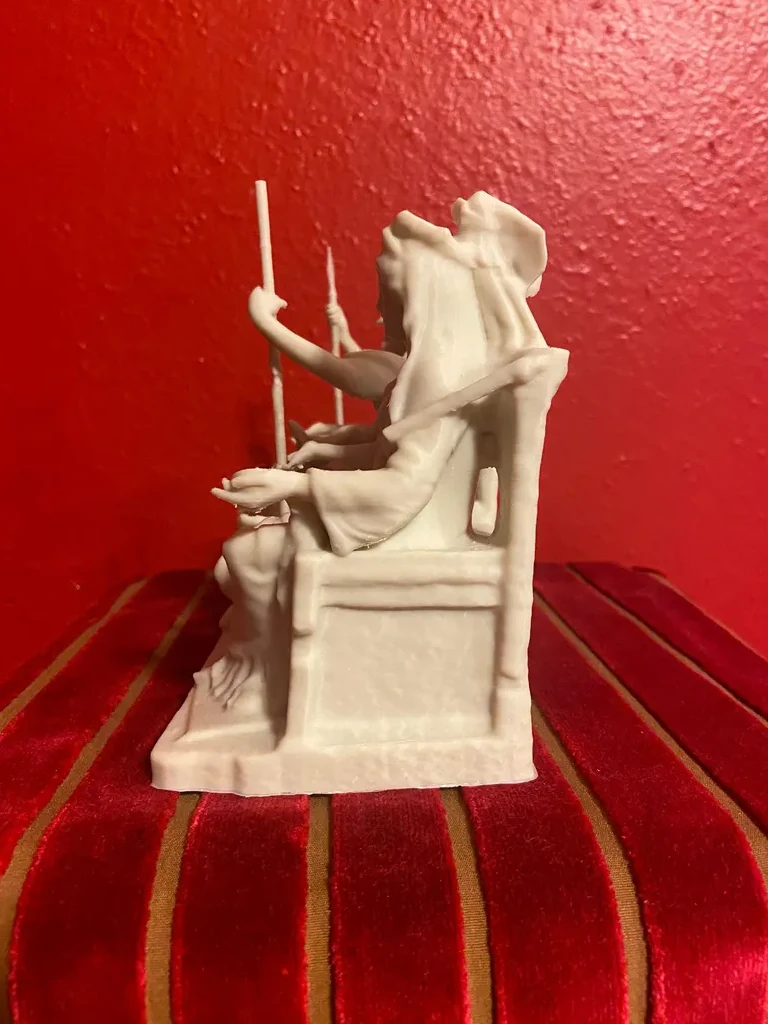
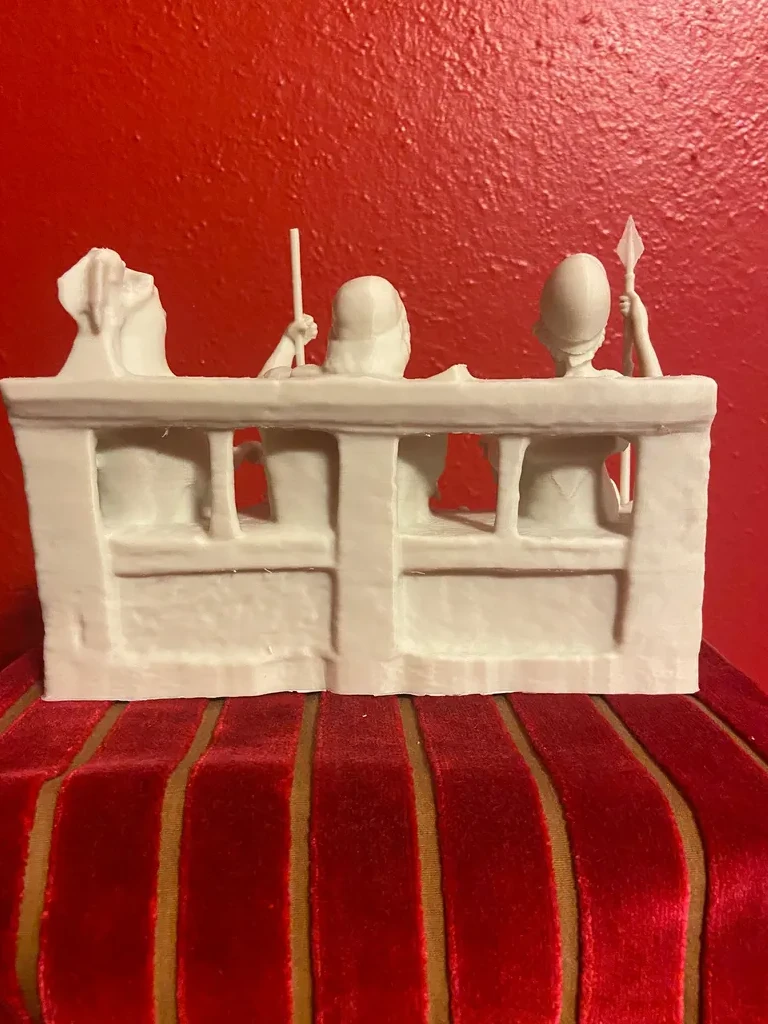
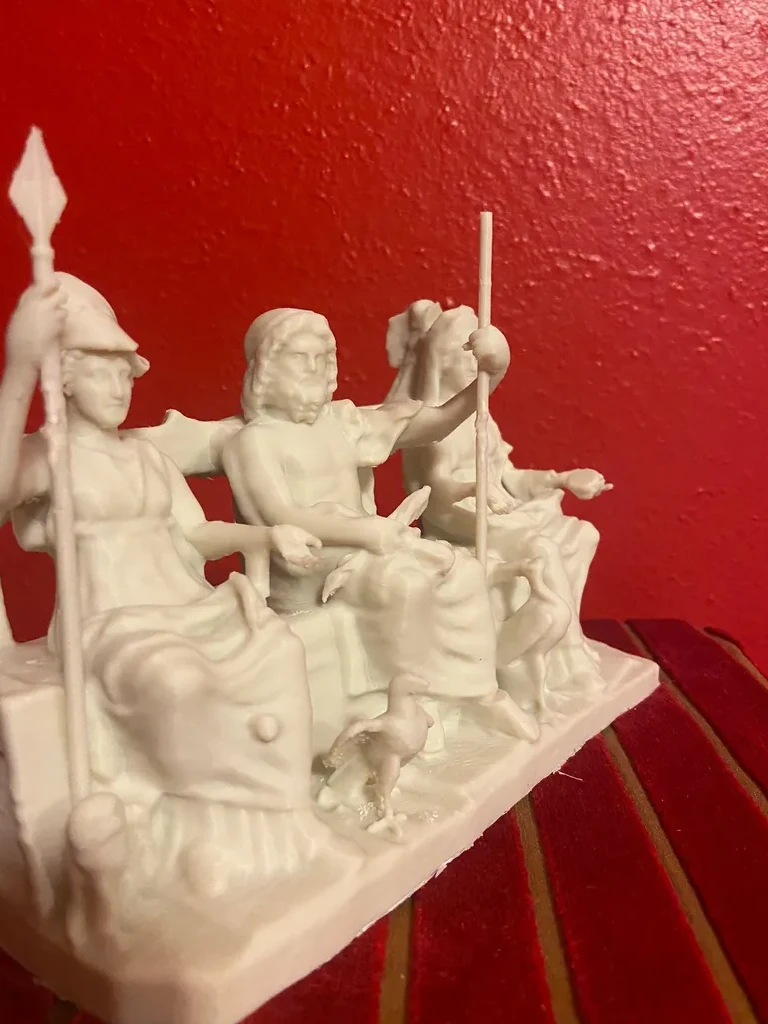
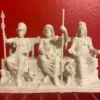
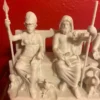
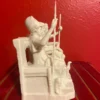
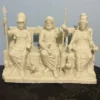
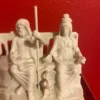
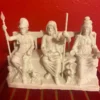
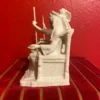
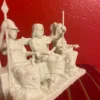
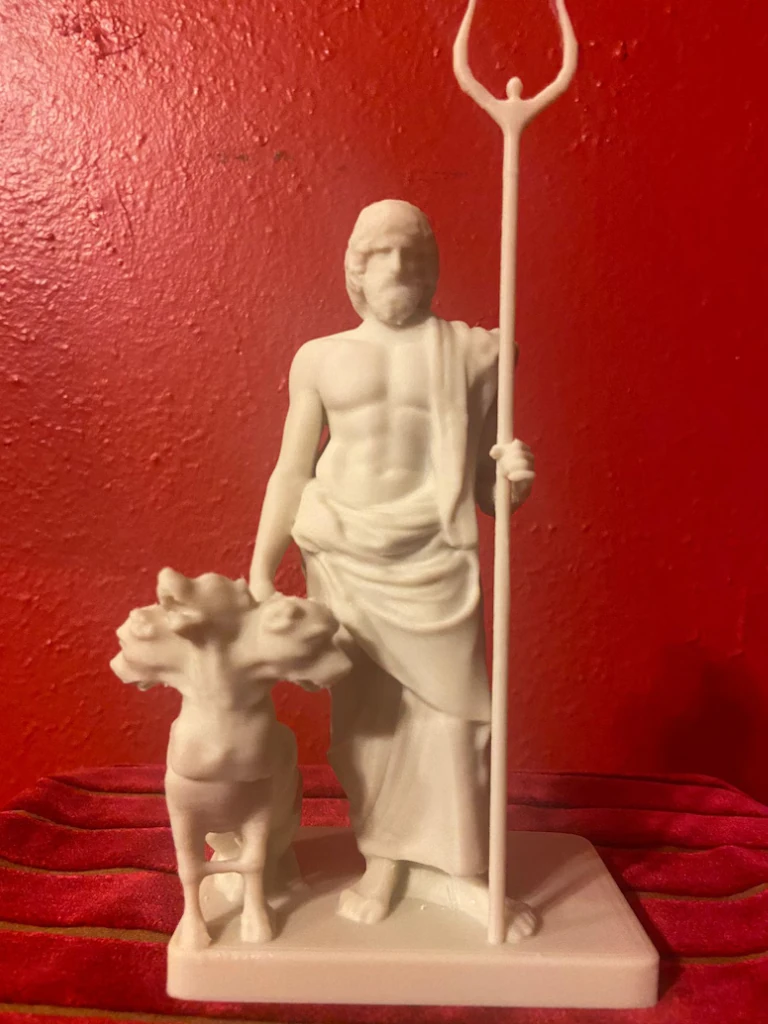
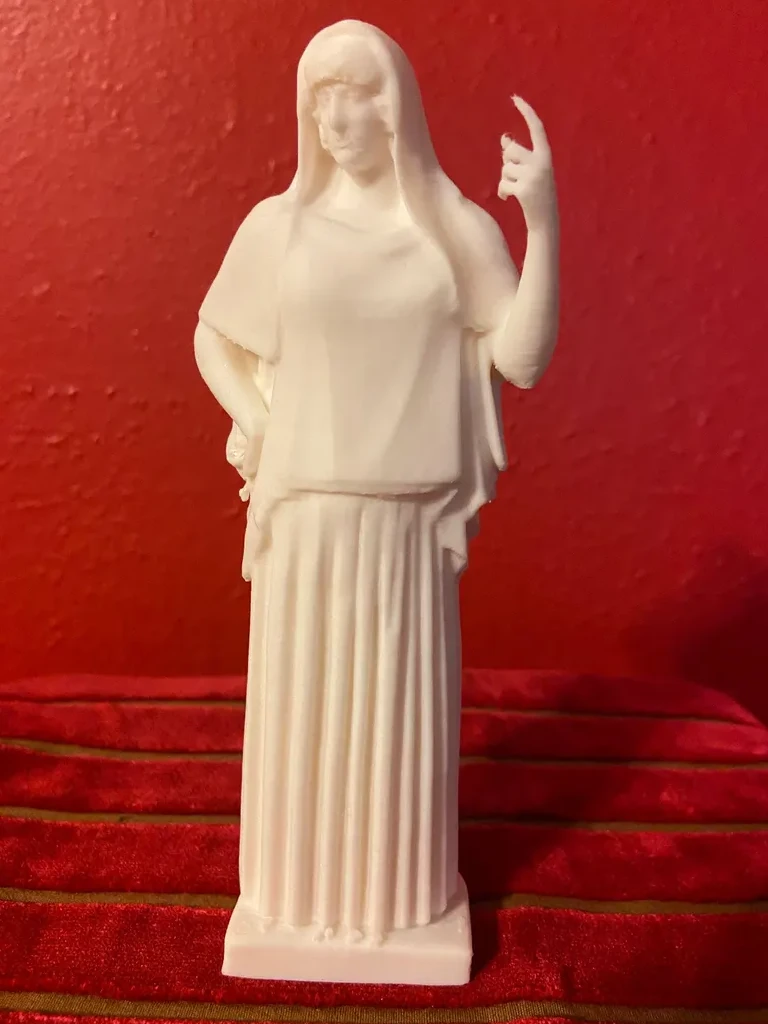
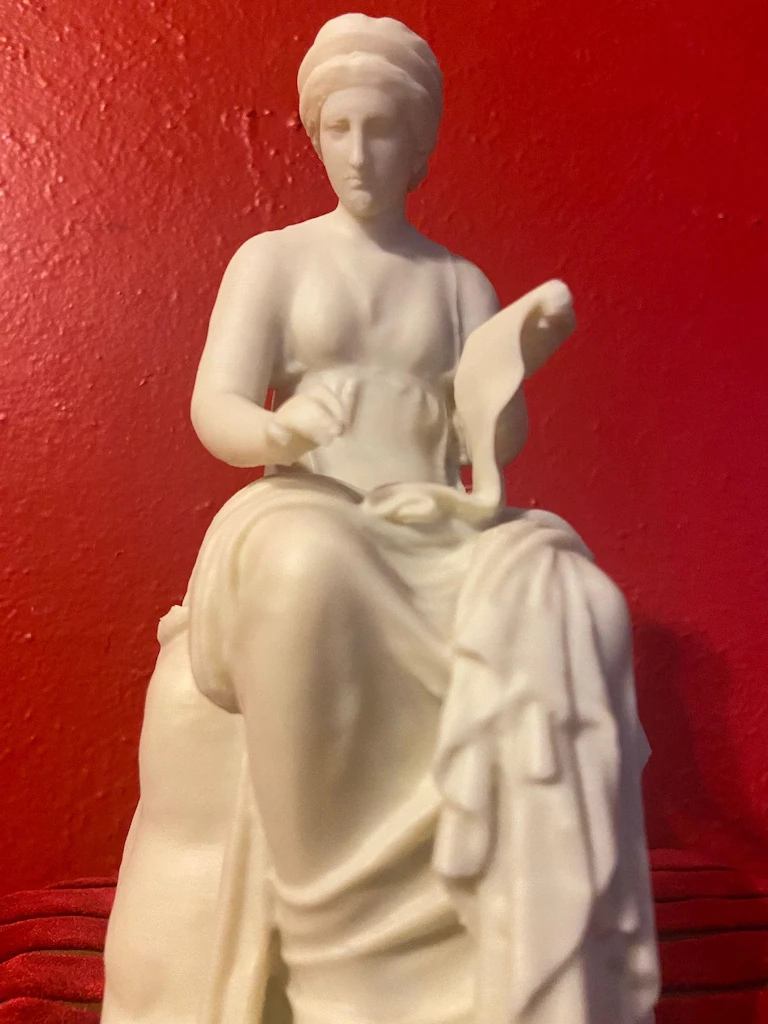
This majestic sculptural group (originally in white marble) and recreated by our digital sculptor in high quality PLA printing material, dated between the years 160 and 180 CE, represents the three most venerated deities of the classical Roman world. Discovered in the remains of a Roman villa in Guidonia Montecelio and now housed in the Rodolfo Lanciani Archaeological Museum, this work is one of the few known complete representations of the so-called Capitoline Triad. Carved as a single ensemble, the three figures are seated on a shared throne, evoking solemnity, symmetry, and hierarchy. In the center sits Jupiter, holding a scepter in his left hand and a bundle of lightning bolts in his right. At his feet rests an imperial eagle, emblem of power and sovereignty. Behind his head, a small, winged figure leans forward to crown him with oak leaves. To the left is Juno, her face partially veiled, dressed in a heavily draped tunic and wearing a diadem. She holds a phiale for libations in her left hand, and at her feet lies a peacock, a symbol associated with majesty and the sacred character of Juno. Like the other figures, she is crowned by a winged Victory emerging from behind her head, although the original source for this detail was lost and could not be fully reconstructed. Completing the composition is Minerva, positioned to the right. She is dressed in a short tunic and cloak, with a Corinthian helmet pushed back, and is believed to have held a round shield with her left arm, which could not be recreated due to lack of a reliable source. At her feet rests an owl, the symbol of Minerva’s wisdom. Though her right arm is missing, it is thought that she once held a spear or raised her helmet. She is crowned by a small, winged figure, symbolizing victory and honor. Every iconographic detail, from the animal symbols to the crowns and the gesture of each figure, conveys a political and sacred message. The compositional balance, the treatment of the drapery, the volumes, and the posture of the figures make this work an exceptional example of Roman sculptural art from the Antonine period. Several parts of the original piece reached us incomplete, but they have been carefully reconstructed by the sculptor at Hephaisteion with historical and technical fidelity, though not all could be restored due to the absence of verifiable sources.
Jupiter: the face, the lower section of the lightning bolt, the arm holding the scepter, throne details, and parts of the imperial eagle have been restored.
Juno: the right hand that held the patera was completely rebuilt, along with part of the veil and folds of the mantle.
Minerva: the damaged part of the face and both missing arms were reconstructed, including the spear she is believed to have held and the owl at her feet, though the shield was not added.
Thanks to this respectful and precise restoration, the Capitoline Triad by Hephaisteion has regained its original splendor and now stands as a piece worthy of any altar or Lararium, for those who wish to honor or show reverence to the protector Gods of Rome: Jupiter, Juno, and Minerva.